10 Energy Savings Ideas for Small Businesses
Small business energy savings starts by finding what runs when it should not, then tightening HVAC schedules, lighting, plug loads, equipment buying, and staff routines.
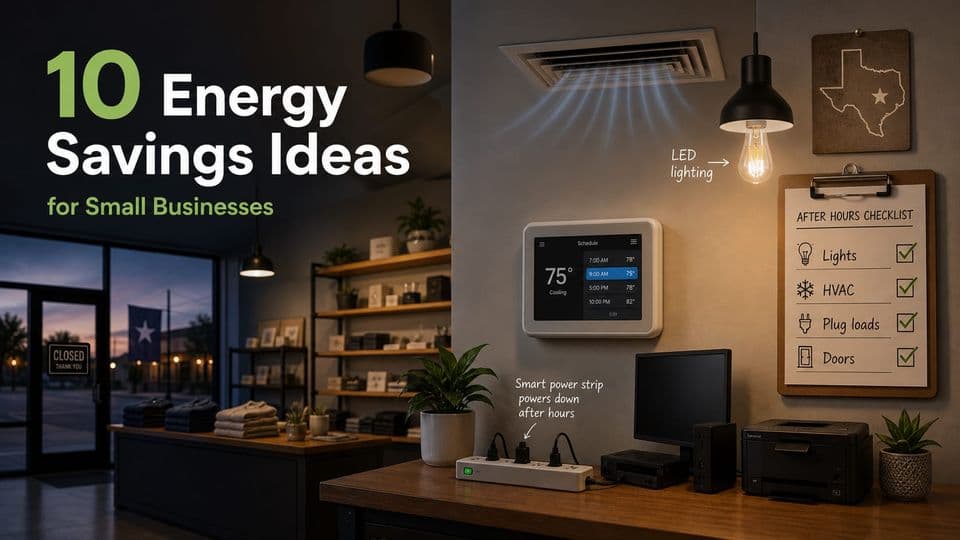
Key Takeaways
- 1Start with an after-hours walkthrough so the business can spot lights, equipment, HVAC runtime, and other waste before buying upgrades.
- 2HVAC savings work should focus on maintenance, filters, thermostat schedules, equipment sequencing, airflow, and heat-gain control.
- 3Lighting improvements include both replacing inefficient lamps with suitable LEDs and using controls where rooms or exterior areas sit empty.
- 4Plug-load reduction works best when noncritical devices are powered down while essential systems stay safely on.
- 5Use ENERGY STAR certified products as a purchasing filter when equipment is already due for replacement, not as a reason to throw away working equipment.
10 Energy Savings Ideas for Small Businesses
Small business electricity costs come from systems that run before opening, during the day, and long after everyone leaves. The most practical energy savings ideas do not start with a purchase. They start with looking at what is already switched on and asking whether it needs to be.
The 10 ideas below are grounded in official guidelines from ENERGY STAR for commercial buildings. Each one focuses on operations, maintenance, and habits rather than plan shopping or speculative payback numbers.
Check What Runs After Hours
The single most effective first step is a walkthrough after closing or before anyone arrives. Walk every room, the back office, the storage area, the kitchen, the break room, and the exterior. Note what is still lit, what is humming, and what is cycling on and off.
Look for lights in rooms nobody is using, a HVAC system running in a zone that has been empty for hours, monitors and printers with glowing indicator lights, warm kitchen equipment that was left on, and exterior signs that stay lit too late into the night.
This after-hours walkthrough costs nothing and immediately shows where electricity is being used without anyone needing it.
Write down what you find, then fix the obvious items before considering any equipment purchase. If the walkthrough raises questions about whether usage matches the charges you see, compare your findings with how to audit your electricity bill.
Ask About Audits, Rebates, and Program Rules
A commercial energy audit can identify the same waste you might miss on a walkthrough, plus hidden issues like air leaks, insulation gaps, and equipment efficiency. But audit availability, cost, and eligibility vary widely.
Ask the utility, city utility, co-op, transmission and distribution utility (TDU), or landlord whether any audit, assessment, rebate, or incentive exists for small businesses in your area.
If a rebate is available, it often requires preapproval, so read the rules before buying anything. Keep a copy of the program documentation for your records.
Schedule HVAC Maintenance Before Heavy Seasons
Heating and cooling can be the largest single electricity user in a small commercial space. The goal of maintenance is to keep the system moving air properly so it does not have to work harder than it should.
Schedule a tuneup before summer cooling season and again before winter heating season. During maintenance, the technician should check or replace the filter, inspect the coils, look for refrigerant or air leaks, and examine insulation on exposed ducts.
Filter replacement frequency depends on the unit type, how dusty the space is, and how many hours the system runs. Follow the manufacturer's schedule and check during heavy-use months. A clogged filter makes the system run longer than necessary.

Set Thermostats Around Real Business Hours
Many small businesses set thermostats once and never revisit them. That means the HVAC runs for eight or ten hours when nobody is there. Review occupied and unoccupied time periods to match actual staff and customer schedules.
Check the startup time. If the first employee arrives at 8 a.m., the system does not need to start running at 5 a.m. unless the space requires a long cooldown or warmup.
Similarly, the setback temperature after closing should allow the system to coast instead of maintaining full comfort.
In spaces with multiple rooftop units or split systems, verify that each unit is sequenced to run only when its zone needs conditioning. For leased spaces, confirm with the landlord or property manager before changing thermostat schedules or installing a smart thermostat.
Keep Airflow Clear and Block Direct Heat
Even a well-maintained HVAC system wastes electricity if the air cannot move freely or if the space gains heat from the sun.
Keep supply and return vents clear of furniture, boxes, displays, shelves, and temporary storage. A blocked vent forces the system to run longer to heat or cool the same area.
Close exterior doors while the HVAC is running. Look for obvious air leaks around windows, doors, and utility penetrations where you control the space. For rented spaces, ask the landlord before adding door closers, weatherstripping, or window films.
On windows that receive direct afternoon sun, use blinds, shades, screens, or films to reduce heat gain. This alone can make the thermostat more comfortable without lowering the set point.
Replace Inefficient Lighting With the Right LEDs
If your lighting uses incandescent bulbs, halogen lamps, or older fluorescent tubes, LED upgrades can reduce electricity use significantly. The key is choosing LEDs that fit the existing fixture, socket, brightness needs, and operating schedule.
Evaluate each space separately. A retail display may need warmer light and good color rendering, while a warehouse needs high-lumen output. Safety and task lighting should meet code requirements.
For rented spaces, check the lease before changing fixtures. Some landlords own the building lighting and may require approval.
Do not replace working fluorescent tubes with LEDs based on a generic percentage claim. Instead, compare the wattage of the current lamp to the equivalent LED and estimate the savings based on your actual hours of operation.
Use Lighting Controls in Empty Rooms
Replacing bulbs is only half the lighting solution. The other half is making sure lights are not on when nobody is using the space.
Install occupancy sensors in restrooms, storage rooms, break rooms, closets, and any room that is frequently empty while the business is open. Use timers or photocells for exterior signs, parking lot lights, and display lighting that should only run during specific hours.
Avoid controls in areas where safety, security, or code requires continuous lighting. Exterior walkways and emergency exit paths should stay lit as needed.
For large open areas like retail floors, daylight harvesting controls can dim lights near windows when natural light is sufficient. These controls are best planned during a renovation rather than as a quick retrofit.
Reduce Plug Loads From Office Equipment
Plug load is the electricity used by anything plugged into an outlet. In a small office that includes computers, monitors, printers, copiers, phone chargers, desk fans, and small appliances.
Enable sleep or power-down settings on every computer monitor and printer. Most operating systems offer power management options that put the device into a low-power state after a period of inactivity.
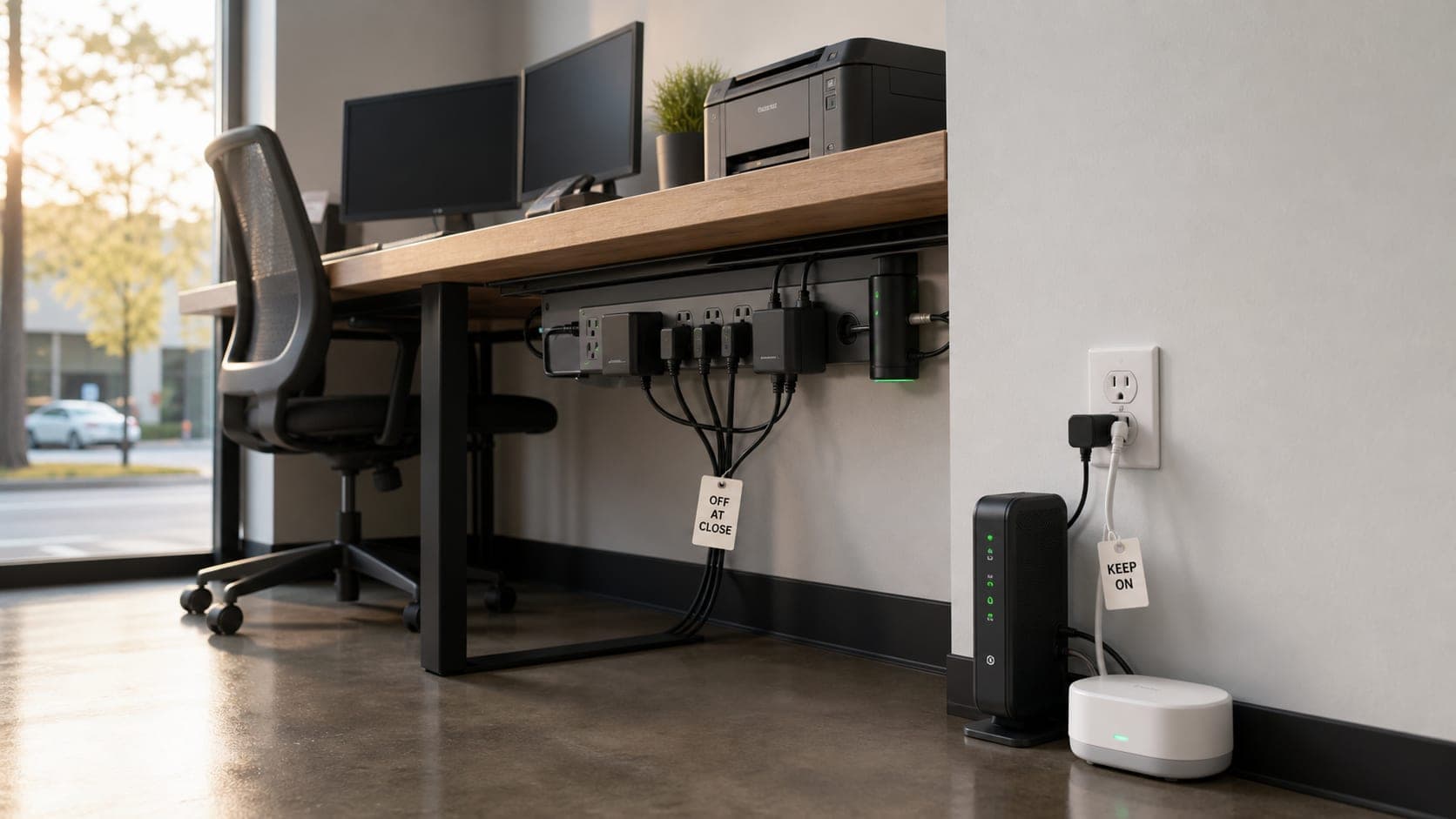
Use smart power strips for noncritical devices. When the main workstation is turned off at night, the smart strip cuts power to peripherals like speakers, chargers, and desk lamps.
Essential equipment such as security systems, network routers, refrigerators, medical devices, and process equipment should stay on a separate outlet that does not go through a switch. Never shut off safety or life-support systems.
Choose ENERGY STAR Equipment When Replacement Is Due
When an existing computer, copier, refrigerator, HVAC unit, or other eligible product reaches the end of its useful life, replace it with an ENERGY STAR certified model.
Prioritize replacements for equipment that runs many hours per day or supports core operations. An ENERGY STAR certified commercial refrigerator uses less electricity than a standard model, and an ENERGY STAR certified rooftop unit may qualify for utility rebates in some areas.
Before buying, check the ENERGY STAR product finder to confirm the model is certified. If a rebate is available, apply before purchasing because many programs require preapproval.
Make Staff Routines Part of Daily Operations
Energy savings stick when employees know what to do and why. Assign simple opening and closing responsibilities for lights, thermostats, computers, and shared equipment.
At closing, have someone walk the space to turn off lights in empty rooms, put computers to sleep, and check that exterior doors are closed. At opening, set the thermostat to occupied mode only when the first person arrives.
Encourage employees to report blocked vents, uncomfortable temperatures, lights that stay on during cleaning, or equipment that runs after hours. Their daily view often catches waste that a manager would miss.
After these operational ideas are in place, a business can consider evaluating cleaner energy options like solar. Treat solar as a later step after reducing avoidable waste. Before making any solar decision, obtain current official information from the local utility, interconnection coordinator, a qualified installer, and licensed tax or financial professionals. Do not rely on generic payback or incentive claims.
Small Business Energy Savings FAQs
Editorial standards
SlashPlan publishes independent guidance to help Texans compare electricity plans. Our editorial team reviews each article without advertiser influence. See our editorial guidelines and monetization disclosure.
About the author
Roi CahanaEnergy advisor helping Texans better understand their electricity options and make more confident decisions. Focused on simplifying electricity plans, explaining confusing terms, and sharing practical guidance to help readers avoid common mistakes when comparing rates, contracts, and renewals.
Ready to compare plans?
Enter your ZIP code to see electricity plans available at your address.