Fixed vs. Variable Electricity Plans
A fixed electricity plan usually gives you more rate stability. A variable term gives you more price movement and sometimes more flexibility. The right choice depends on your usage, contract length, plan documents, and tolerance for bill changes.
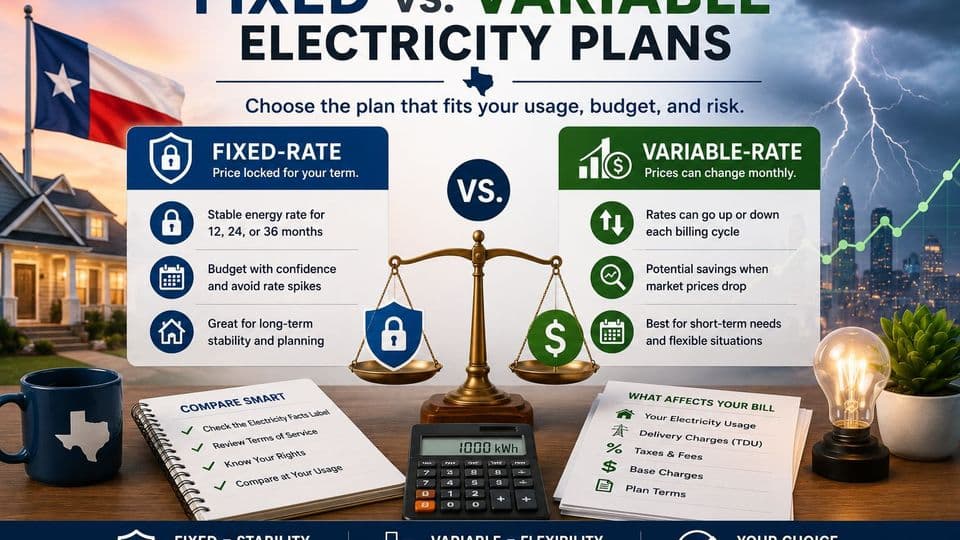
Key Takeaways
- 1A fixed electricity term usually locks the energy rate or pricing structure for the contract period, but it does not freeze your total bill.
- 2A variable electricity term can change from one billing cycle to another, which can make budgeting harder if prices rise.
- 3Texas shoppers should read the Electricity Facts Label, Terms of Service, and Your Rights as a Customer disclosure before enrolling.
- 4Usage, delivery charges, taxes, fees, bill credits, and minimum usage rules can change the final bill even on a fixed-rate plan.
- 5Fixed plans usually fit shoppers who want price stability, while variable plans may fit short-term or highly flexible situations.
A fixed electricity term keeps the energy rate or pricing structure in place for the contract period. A variable term can change from one billing cycle to another based on the plan's terms. Texas shoppers face both options when choosing retail plans, so the difference matters for budgeting and risk.
The Short Answer
A fixed-rate electricity plan locks the energy charge for the contract term, such as 12, 24, or 36 months. A variable-rate electricity plan can change its price from billing cycle to billing cycle based on the plan terms.
A fixed electricity plan does not mean the total bill is frozen because usage, regulated delivery charges, taxes, and fees can still affect the final amount. A variable plan is not automatically bad, but it requires more attention and exposes the customer to price movement.
Fixed term meaning
The term fixes the energy pricing structure stated in the plan documents for its length.
Variable term meaning
The term allows the energy price to adjust according to rules set in the agreement.
What a Fixed Electricity Term Really Locks In
The fixed part is typically the energy rate or pricing formula stated in the Electricity Facts Label and contract documents. The plan term is the period when that fixed pricing applies, not a promise that monthly bills will be identical.
Customers should check the Electricity Facts Label, Terms of Service, and Your Rights as a Customer disclosure before enrolling. Some plans advertised as fixed can still include usage credits, base charges, minimum usage fees, or tiered pricing that changes the effective average price at different usage levels.
What can change in a Variable Electricity Plan
A variable-rate electricity plan does not keep the same price for the full term unless the plan documents say otherwise. Monthly price changes may reflect provider pricing decisions, market conditions, seasonality, or other terms described in the agreement.
Variable plans may appeal to shoppers who need short-term flexibility, but they can become expensive when market prices rise or usage spikes. Customers should look for how notice of price changes is handled and whether the plan has a contract term, cancellation fee, or month-to-month structure.
Fixed Rate, Variable Rate, and Indexed Rate Are Not the Same Thing
Fixed-rate plans are built around price stability for the contract term. Variable-rate plans can change at the provider's discretion according to the contract. Indexed-rate plans use a formula tied to a public index or market factor, so the price can change even though the formula is defined upfront.
The Electricity Facts Label should identify the rate type and explain how the price is calculated.
How Contract Length Changes the Decision
Longer fixed terms can protect against price changes for more billing cycles, but they may include an early termination fee if the customer switches before the contract ends. Shorter terms can be useful when a customer is moving soon, testing a provider, or expecting to shop again soon.
Variable month-to-month plans may offer flexibility, but customers should be prepared to monitor prices more often. A plan that looks good for one season may be less attractive during high-usage summer months if the pricing can change.
What Can Still Change on a Fixed-Rate Electricity Plan
Electricity usage changes the bill even if the energy rate stays fixed. Regulated transmission and distribution utility charges can change and are passed through separately from the retail energy charge.
Taxes and government fees may also affect the bill. Bill credits, minimum usage fees, and base charges can change the effective average rate when usage changes.
When a Fixed Electricity Term Usually Makes Sense
A fixed term often fits customers who want bill planning certainty and do not want to check rates every month. It can be useful for households with high summer air-conditioning use because unexpected rate increases can be painful during high-usage months.
It may be a better fit for customers staying at the same address through most or all of the contract term. It is usually easier to compare fixed plans side by side because the price structure is less likely to change after enrollment.
When a Variable Electricity Term May Be Worth Considering
A variable plan may be reasonable for a very short stay, a temporary living situation, or a customer who needs flexibility more than price certainty. It can work for shoppers who actively monitor their rate and are ready to switch if the price moves against them.
It is riskier for customers on tight budgets because the rate and bill can rise at the same time usage rises. The plan documents should be checked for cancellation rules, price-change language, and whether the plan renews automatically.
How to Compare Fixed and Variable Plans Without Getting Tripped Up
Compare plans using the same usage level, especially 500, 1000, and 2000 kWh examples when available on the Electricity Facts Label. Look beyond the advertised average rate and read the pricing details behind it.
Check the base charge, energy charge, delivery charges, usage credits, minimum usage fees, contract length, renewal terms, and early termination fee. Use your past 12 months of usage if available because a plan that looks cheap at 1000 kWh may not be cheap at your actual usage level.
Texas Documents to Check Before You Enroll
The Electricity Facts Label shows the plan's pricing details and average price examples. The Terms of Service explains contract rules, fees, renewal language, and other conditions. The Your Rights as a Customer disclosure explains customer protections and complaint-related information.
Customers should save these documents before enrolling so they can verify terms later if the bill does not match expectations.
Common Mistakes With Fixed and Variable Electricity Terms
Assuming fixed-rate means the total monthly bill will be the same. Choosing a variable plan and forgetting to monitor renewal or monthly price changes. Comparing plans at a usage level that does not match the home's real usage pattern. Ignoring early termination fees when choosing a long fixed term. Overlooking pass-through delivery charges and non-energy fees.
A Simple Decision Rule Before You Choose
Choose a fixed term when you want price stability, plan to stay through the contract, and prefer a set energy rate over flexibility. Consider a variable term only when flexibility matters more than rate certainty and you are willing to monitor price changes. For either plan type, compare the Electricity Facts Label against your actual kWh usage before enrolling. The safest practical move for most budget-conscious Texas shoppers is to know which bill pieces are fixed, which can change, and what happens at renewal.
Fixed and Variable Electricity Terms FAQ
Sources & References
Editorial standards
SlashPlan publishes independent guidance to help Texans compare electricity plans. Our editorial team reviews each article without advertiser influence. See our editorial guidelines and monetization disclosure.
About the author
Roi CahanaEnergy advisor helping Texans better understand their electricity options and make more confident decisions. Focused on simplifying electricity plans, explaining confusing terms, and sharing practical guidance to help readers avoid common mistakes when comparing rates, contracts, and renewals.
Ready to compare plans?
Enter your ZIP code to see electricity plans available at your address.