How to Read Your Electricity Bill in Texas
A Texas electricity bill is more than a total due. This guide shows where to find usage, delivery charges, plan fees, credits, and the details that matter before comparing plans.
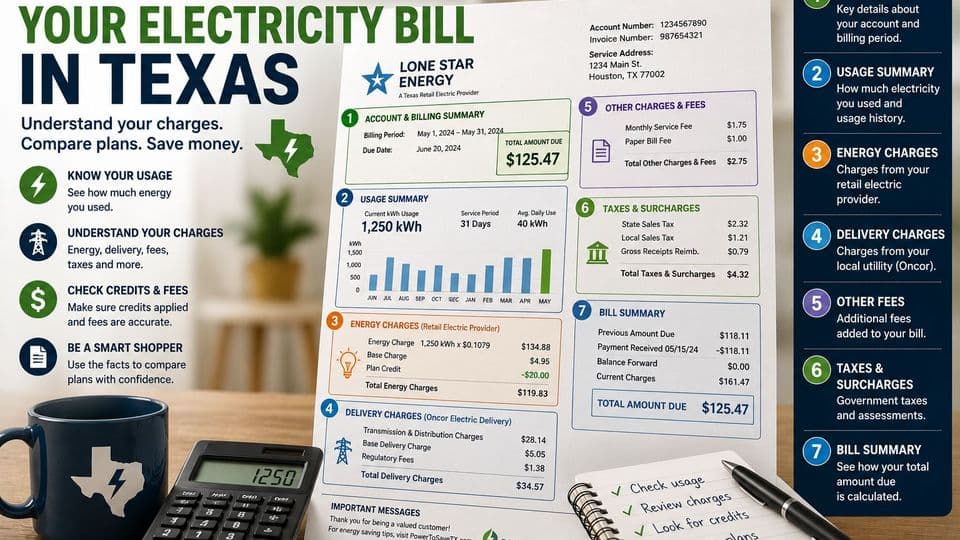
Key Takeaways
- 1A Texas electricity bill usually combines provider energy charges, local utility delivery charges, taxes, fees, and plan-specific credits.
- 2Your current kWh usage and usage history are the most useful numbers for comparing plans against your real household pattern.
- 3TDSP or TDU delivery charges are separate from the retail provider's energy price and usually do not disappear when you switch providers.
- 4Bill credits, minimum usage rules, tiered rates, and free-use periods can make the advertised rate differ from the effective price on your bill.
- 5The Electricity Facts Label explains the plan's pricing rules, while the monthly bill shows what happened during one billing period.
- 6Before switching plans, compare costs at low, typical, and high usage levels instead of relying on one advertised usage example.
A Texas electricity bill is more than a total due. This guide shows where to find usage, delivery charges, plan fees, credits, and the details that matter before comparing plans.
The Fast Way To Read A Texas Electricity Bill
Start with the service address, billing period, due date, and total amount due. These items tell you what period the bill covers and when payment is expected.
Look next for current kWh usage. This number shows how much electricity was consumed in the billing cycle and helps explain whether the bill changed because of rate differences or higher consumption.
Separate new monthly charges from past-due balances, late fees, or payment adjustments. Past-due amounts or credits from prior periods can shift the total without reflecting current plan costs.
Billing period, due date, and current amount due
These fields appear near the top of most bills. Confirm the service address matches the location being billed and note the exact dates the usage covers.
Current kWh usage
The usage figure is shown in kilowatt-hours. Compare it to the same month last year or to other recent months to see whether the bill movement comes from weather-driven cooling loads or from something else.
Account And Service Details To Confirm First
Identify the account number, invoice number, customer name, service address, and billing address. These fields confirm the bill belongs to the correct location and help when making payments or contacting support.
Your ESIID appears in the account details or on a back page of the bill. This unique service identifier is often needed when shopping for new plans or when moving.
Some providers list additional account information on a separate page or in a summary section. If the bill is for a rental or shared meter, double-check that the service address and ESIID match the correct unit.
Energy Charges And Delivery Charges Are Not The Same
Your retail electricity provider sells the plan, issues the bill, and applies any credits or fees spelled out in that plan. The energy charge line item reflects the price for the electricity itself under the terms you chose.
TDU or TDSP delivery charges come from the local utility that owns and maintains the wires to your home. These charges cover transmission, distribution, and system upkeep and remain even when you switch providers.
Switching retail plans can change the energy price and certain plan fees, but regulated delivery charges tied to your address usually stay in place.
What your retail energy provider charges
This section lists the energy rate, any base charge, and plan-specific items such as credits or minimum-usage adjustments.
Where TDSP or TDU delivery charges appear
These line items often carry the name of the utility serving your area and appear below the energy charges on the bill.
Usage Section
A kilowatt-hour measures electricity consumption. One kWh equals 1,000 watts used for one hour. Your monthly total in kWh is the main driver of bill size outside of rate structure.
Usage history on the bill shows month-by-month consumption for the past year. In Texas, summer months often show sharp increases from air-conditioning.
Usage levels also determine whether bill credits apply or whether minimum-usage fees kick in, so the same number of kWh can produce different effective prices under different plans.
Meter reads and current kWh
Check whether the reading is billed or estimated. An estimated read can create a later correction when the meter is read again.
Seasonal usage patterns to keep
Save or photograph the 12-month usage chart if available. This record gives a realistic range for comparing plans rather than relying on a single advertised example.
Billing Summary
Review the previous amount due, recent payment, balance forward, current charges, and total due. This sequence shows how last month's bill and payment affect the current statement.
Plan fees such as base charges, paper-bill fees, or minimum-usage fees may appear here. Watch for late fees from prior periods as well.
Credits reduce the bill only when the household meets the stated conditions. If usage falls short of a credit threshold, the credit does not appear or is reversed.
The Effective Price Per kWh On This Bill
Divide the total current charges by the kWh used to get a rough effective rate for the month. This figure includes energy, delivery, and fees, so it will not match the advertised energy rate.
Break the bill into separate categories before comparing it with any advertised price. Note which portions are energy charges versus delivery charges, taxes, or one-time adjustments.
Use the calculation as a quick check rather than as a direct substitute for reading the Electricity Facts Label.
How The Bill Connects To The Electricity Facts Label

The monthly bill records what happened during one billing period. The Electricity Facts Label describes the plan's pricing rules, fees, credits, and usage examples before enrollment.
Match bill line items to EFL categories such as energy charge, base charge, delivery charges, and usage tiers. The Terms of Service and Your Rights as a Customer disclosure supply the remaining contract details.
Bill Credits, Minimum Usage Fees, And Rate Tiers
Many credits require a minimum kWh level during the billing cycle. Using less than that amount can remove the credit and raise the effective price paid.
Tiered rates or minimum-usage fees create different costs at low versus high usage. Review these rules on the EFL so the advertised rate does not mislead when applied to your actual pattern.
Free Nights, Weekends, And Time-of-Use Plans
These plans can lower costs when most household usage falls inside the discounted window. They can raise costs when the largest loads occur during higher-priced hours.
Compare the full EFL against your own hourly usage before selecting a plan based on a free-use headline.
Taxes, Assessments, And Local Utility Line Items
Taxes, assessments, and gross-receipts reimbursements appear on most Texas bills. Some of these items are set by local rules or the utility rather than by the retail provider.
These charges remain when you switch providers, so focus comparison efforts on the controllable portions of the bill.
Provider-Specific Sections You Can Skim
Some bills include environmental-impact data, payment slips, assistance information, or usage graphs. These sections support payment and customer service but usually do not change plan-shopping math.
Bill layout varies by provider, so look for the concepts described above rather than exact section names.
How To Use a Bill To Shop For A Better Texas Plan
Collect 6 to 12 months of kWh data when possible. At minimum, note low, typical, and high-usage months to test how different plans perform across your range.
Compare plan costs at several usage levels instead of anchoring on a single advertised price. Enter the service address or ZIP code and ESIID when shopping so delivery charges reflect the correct utility territory.
Read the Electricity Facts Label and plan documents before enrolling, paying special attention to credits, fees, contract length, and early-termination terms.
For a quicker comparison, use SlashPlan Bill Rate Check to find the best energy plans based on your recent bill.
If The Bill Looks Wrong Or Too High
Check usage first, then billing-period length, rate plan, missed credits, old balances, delivery charges, and taxes. An unusually long billing period or a missed credit often explains a spike.
Contact the retail provider for questions about billing, plan details, or payments. Contact the local utility if the issue is on the delivery side and the provider directs you there.
Keep payment options and assistance programs separate from plan-shopping decisions. These tools can help manage the current bill without requiring a switch.
Texas Electricity Bill FAQs
Sources & References
Editorial standards
SlashPlan publishes independent guidance to help Texans compare electricity plans. Our editorial team reviews each article without advertiser influence. See our editorial guidelines and monetization disclosure.
About the author
Roi CahanaEnergy advisor helping Texans better understand their electricity options and make more confident decisions. Focused on simplifying electricity plans, explaining confusing terms, and sharing practical guidance to help readers avoid common mistakes when comparing rates, contracts, and renewals.
Ready to compare plans?
Enter your ZIP code to see electricity plans available at your address.