How to Report a Power Outage in Texas
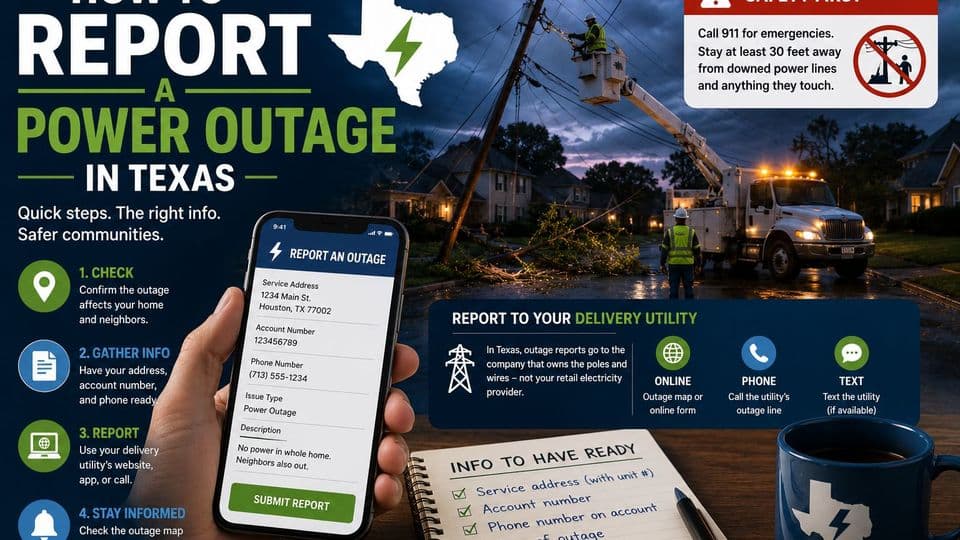
In Texas, a power outage is usually reported to the local delivery utility, not the retail electricity provider that sells your plan. Here is how to find the right contact, report the outage, check status, and handle safety hazards.
Key Takeaways
- 1In most Texas retail choice areas, report a power outage to the local delivery utility, not the retail electricity provider that sells your plan.
- 2Call 911 first if there is a downed line, fire, sparking equipment, or any immediate danger.
- 3Before reporting, check whether the outage affects the whole home and whether nearby homes or streetlights are also out.
- 4Have your service address, unit number, phone number, and account number ready in case the utility's lookup tool needs them.
- 5Use the utility outage map or status tool after reporting to track known outages and restoration updates.
- 6Switching retail electricity providers usually does not change which utility restores power at the same Texas address.
First, make sure it is not an emergency
Call 911 first if a downed power line, fire, sparking equipment, or any other immediate danger is present. Stay at least 30 feet away from a fallen line and keep other people clear as well. Do not touch the line itself or anything that may connect to it, including fences, water, tree limbs, and vehicles.
If you suspect a gas leak, leave the area and follow gas-specific emergency steps instead of filling out an electric outage form.
In Texas, report the outage to the delivery utility
In retail choice areas, the company that sells your electricity plan is rarely the same company that maintains the poles and wires. Outage reports go to the local transmission and distribution utility that serves your address. Municipal utilities and electric cooperatives outside the main retail choice areas may use their own reporting channels, so confirm your service territory before calling or submitting an online form.
Use the fastest reporting channel available
Most delivery utilities accept outage reports through online forms, outage maps, or phone lines. Online tools work well when internet and cell service remain stable. Phone calls become the better option when the outage has already taken out your connection or when a safety issue requires immediate discussion with an operator. Some utilities also support text reporting, though the exact commands and enrollment steps differ by provider.
What to check before you submit the report
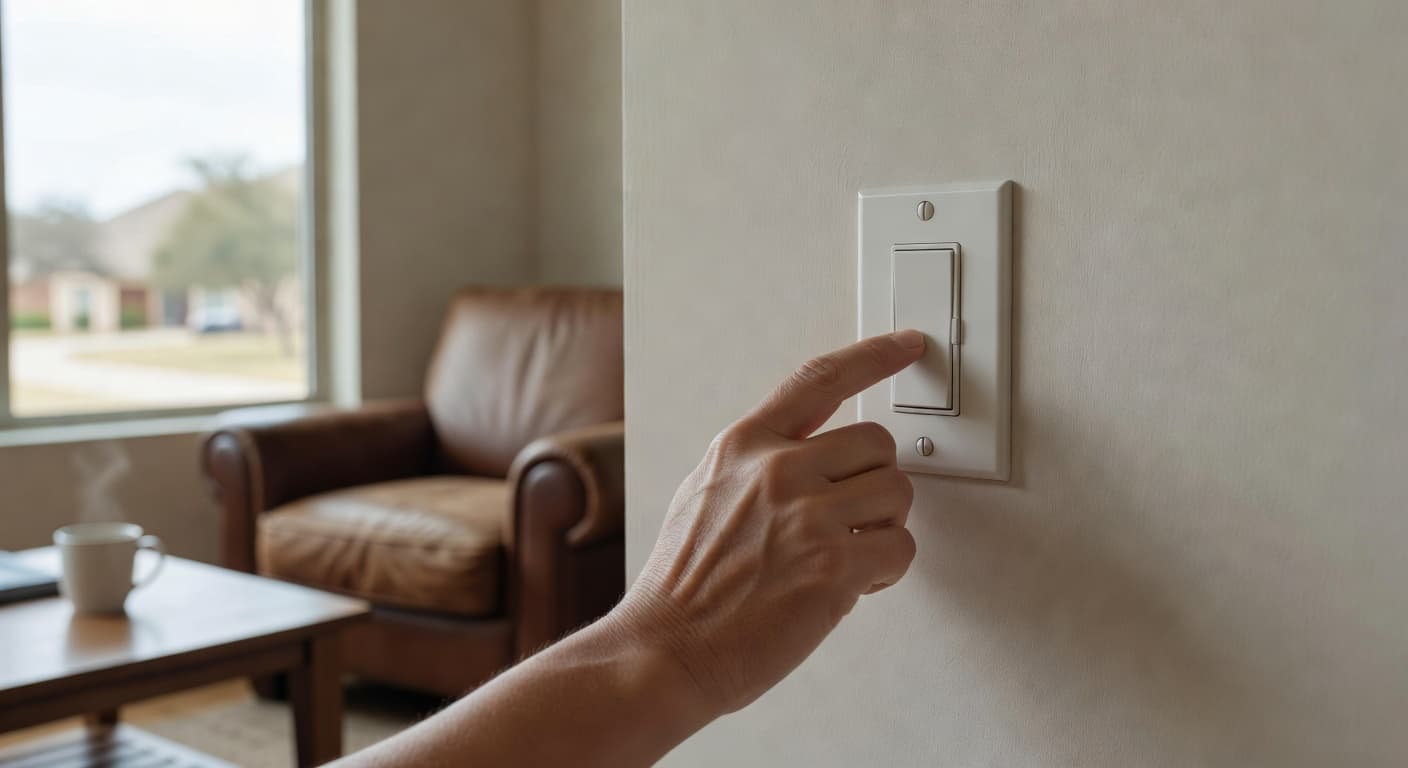
Look around the home and neighborhood before reporting. Determine whether the outage affects every room or only a single circuit, outlet, or appliance. Check the breaker panel only when it is safe and dry. Step outside and see whether neighboring homes or streetlights are affected. If power loss is limited to one room or one appliance, the problem may be inside the home and may need an electrician rather than a utility crew.
Information to have ready
Most reporting tools ask for the service address first, including apartment or unit number. Keep the account number handy in case the address lookup fails. Provide the phone number linked to the account when the system uses that method to locate the record. Describe the outage clearly, noting whether the power is completely out, flickering, or limited to part of the home. If you are reporting on behalf of a neighbor or family member, confirm the exact service address before you begin.
How to check outage status after reporting
Once the report is submitted, return to the utility outage map to see the area listed among known outages. Many utilities combine reporting and status lookup in the same tool, so you can monitor progress without submitting a second ticket. CenterPoint customers in the Greater Houston area, for example, can use the utility's Outage Center for current outage information. Sign up for alerts only through the official utility site. Early restoration estimates can shift as crews assess damage on site, so treat any initial time frame as provisional.
If the address lookup does not work
Enter the service address exactly as it appears on the electric bill. Add or remove apartment numbers, directional prefixes, or zip code details when the first search returns no match. When multiple addresses appear, switch to the outage map or call the utility to identify the correct record. New construction, rural routes, and recent address changes often report faster by phone.
Streetlights, tree problems, and partial power issues
Report streetlight failures through the utility's separate streetlight tool rather than the residential outage form. Tree limbs threatening power lines count as a safety hazard and should be reported through the appropriate utility channel. Flickering or partial power that also affects neighbors can still qualify for a report. Never attempt to clear limbs from lines yourself.
Accessibility and language support
Customers who need assistance with communication can reach Utilities through Telecommunications Relay Service by dialing 711. Many outage pages also accept reports by phone or text when online forms are difficult to use. When accessibility barriers delay a report involving immediate danger, contact emergency services first. Caregivers, neighbors, and property managers can submit reports for affected addresses as well.
What outage reporting means for electricity shoppers
Switching retail electricity providers does not change the delivery utility that restores power at the same service address. Plan selection should focus on rate structure, contract length, usage patterns, and fees instead of outage response times. After power returns, keep the utility contact information and any outage alert preferences up to date for the next event.
Outage Trackers For Texas TDSPs
Use the links below to report an outage to the utility company that maintains the poles and wires in your area:
Power Outage Reporting FAQs
Sources & References
Editorial standards
SlashPlan publishes independent guidance to help Texans compare electricity plans. Our editorial team reviews each article without advertiser influence. See our editorial guidelines and monetization disclosure.
About the author
Roi CahanaEnergy advisor helping Texans better understand their electricity options and make more confident decisions. Focused on simplifying electricity plans, explaining confusing terms, and sharing practical guidance to help readers avoid common mistakes when comparing rates, contracts, and renewals.
Ready to compare plans?
Enter your ZIP code to see electricity plans available at your address.