What Is ERCOT and What Does It Do in Texas?
ERCOT runs most of the Texas electric grid, but it does not sell electricity plans. Here is how ERCOT affects grid reliability, wholesale power, retail switching, and Texas shoppers.

Key Takeaways
- 1ERCOT is the Electric Reliability Council of Texas, the grid operator for most of the Texas electricity market.
- 2ERCOT does not sell electricity plans. Retail electric providers sell plans to customers in competitive choice areas.
- 3ERCOT manages power flow, wholesale market settlement, and retail switching, while local utilities handle delivery infrastructure and outage restoration.
- 4The ERCOT grid covers most, but not all, of Texas and is largely separate from other U.S. power grids.
- 5ERCOT can affect shoppers indirectly because wholesale market conditions and reliability costs can influence the plans providers offer.
ERCOT stands for the Electric Reliability Council of Texas. It operates the main electric grid that serves most of the state, balances supply and demand in real time, and runs the wholesale electricity market that supports retail competition.
What ERCOT stands for
The full name is the Electric Reliability Council of Texas. It functions as the independent system operator for the region.
The short version for electricity shoppers
ERCOT manages the flow of power across the grid and settles transactions between generators and retail providers. It does not sell electricity plans, deliver power to homes, or set customer rates.
What ERCOT does not do
It does not own power plants or transmission lines in most cases. It does not bill customers or restore power after local outages.
Where ERCOT Fits in the Texas Electricity Market
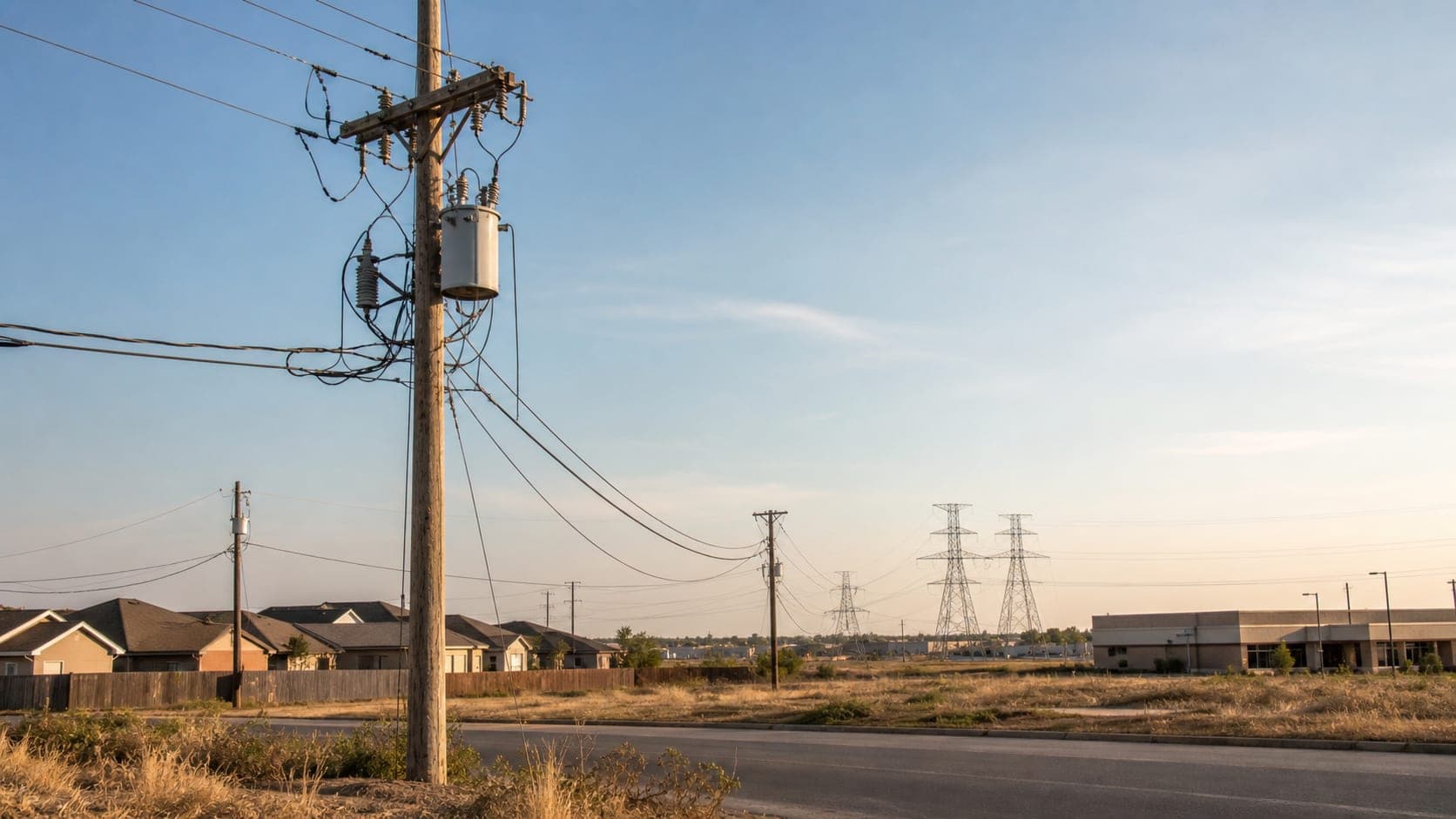
Power moves from generators through high-voltage transmission lines, then to local distribution systems, and finally to homes or businesses. ERCOT coordinates the generator-to-transmission segment and the wholesale market that prices that power.
Retail electric providers purchase electricity through this market and sell plans to customers in competitive areas. Local utilities maintain the poles and wires that reach homes and handle most outage repairs.
The Public Utility Commission of Texas oversees the entire system, including ERCOT's performance.
ERCOT vs. your electricity provider
Your provider sets the plan price, contract terms, and monthly bill. ERCOT supplies the wholesale price signals that providers use when they assemble offers.
ERCOT vs. your local utility
The utility owns and operates the distribution system in its territory. It restores power after storms and collects delivery charges that appear on every bill.
ERCOT vs. the PUCT
The Public Utility Commission approves market rules and monitors ERCOT's operations but does not direct day-to-day power scheduling.
What ERCOT Actually Does Every Day
ERCOT forecasts demand and instructs generators to produce the right amount of power at the right moment. It runs a day-ahead market where participants schedule output for the next day and a real-time market that corrects imbalances as conditions change.
It also procures ancillary services that keep voltage and frequency stable across the grid.
Balancing supply and demand
Supply and demand must match every second. ERCOT issues dispatch instructions to generators and can request conservation when reserves run low.
Scheduling power across the grid
Operators use both scheduled commitments and real-time adjustments. Most generation resources still clear through market bids rather than direct orders.
Settling the wholesale market
ERCOT calculates the money owed between buyers and sellers after each operating day. These settlements influence the prices that later appear in retail offers.
Does ERCOT Sell Electricity Plans?
No. Customers in competitive choice areas select plans from retail electric providers. ERCOT only administers the switching process when a customer moves to a new provider.
Who sells plans in competitive areas
Retail electric providers offer fixed-rate, variable-rate, and indexed plans. Shoppers compare those offers directly.
What retail switching means
When a customer enrolls with a new provider, ERCOT records the change so the correct provider receives wholesale settlement data. The switch itself does not change the wires or meters at the home.
Which plan documents matter
Review the Electricity Facts Label for rate details, the Terms of Service for contract length and fees, and the Your Rights as a Customer disclosure for cancellation policies.
How ERCOT Can Affect Your Electric Bill
ERCOT does not set the rate on a residential plan. However, wholesale price spikes or grid reliability costs can change the offers providers are willing to make.
Wholesale prices are not the same as your retail rate
A fixed-rate plan locks the energy charge for the contract term. Delivery charges and taxes remain regulated and can still change.
Why fixed-rate plans still need a close read
Even fixed plans contain usage tiers, minimum usage charges, or early termination fees that affect the final bill. The advertised rate alone does not show these terms.
The plan terms ERCOT does not control
ERCOT has no authority over early termination fees, renewable energy credit requirements, or how a provider treats transmission and distribution charges.
Does ERCOT Cover All of Texas?
ERCOT serves approximately 90 percent of Texas electric load. Parts of the state fall under other grid operators or vertically integrated utilities.

Why most Texans are in ERCOT
Most population centers and large load centers connect to the ERCOT grid. Retail choice exists only inside the competitive portion of that footprint.
Why some Texans are outside ERCOT
Customers in certain municipal or cooperative territories, along with parts of East Texas and the Panhandle, receive service from other systems. These areas often lack retail plan choice.
Why the Texas Grid Is Different
The Texas Interconnection operates almost entirely within state borders. It maintains only limited asynchronous ties to neighboring grids.
The Texas Interconnection
This separate interconnection covers the majority of the state and runs its own reliability standards and market rules.
Why federal jurisdiction is different
Because the grid is not synchronously connected to the rest of the country, the Federal Energy Regulatory Commission has limited direct authority over ERCOT market rules.
What grid independence does and does not mean
Independence from other grids reduces some forms of federal oversight, yet the Public Utility Commission of Texas and the Texas Legislature still exercise substantial control.
Who Oversees ERCOT
The Public Utility Commission of Texas approves market rules and reviews ERCOT's budget and performance. The Texas Legislature sets the legal framework through statute.
The PUCT's role
The commission appoints board members and monitors whether ERCOT follows approved protocols.
The Texas Legislature's role
Lawmakers can change ERCOT's governing statutes and require new reliability standards after major events.
ERCOT board and market participants
A board oversees ERCOT staff. Market participants, including generators, providers, and consumer representatives, serve on committees that advise on rule changes.
What Happens When Demand Gets Too High
Texas peaks often occur during summer afternoons when air conditioning load rises sharply. ERCOT issues conservation alerts and can activate emergency procedures when reserves fall below required levels.
Conservation notices and grid alerts
Alerts ask customers to reduce usage voluntarily. They appear on provider websites and local news when the grid is stressed.
Controlled outages
If shortages persist, ERCOT directs utilities to rotate outages in specific areas to protect the broader system.
Why summer heat matters in Texas
Air conditioning creates the largest single driver of summer peak demand. A few unusually hot days can push the system to its limits.
What the 2011 and 2021 Winter Storms Showed
The 2011 winter event revealed cold-weather vulnerabilities at power plants and fuel supply infrastructure. The 2021 storm produced larger generation shortfalls and widespread controlled outages.
The 2011 warning sign
That earlier storm led to winterization recommendations that were not fully implemented by 2021.
What happened in February 2021
Extreme cold reduced output from natural gas, coal, nuclear, and wind resources while demand reached record levels. Wholesale prices spiked and rotating outages lasted for days in many areas.
Why one-fuel explanations miss the point
Multiple generation types failed at the same time. Focusing on a single resource overlooks the shared problem of inadequate cold-weather preparation across the fleet.
ERCOT FAQs
Sources & References
Editorial standards
SlashPlan publishes independent guidance to help Texans compare electricity plans. Our editorial team reviews each article without advertiser influence. See our editorial guidelines and monetization disclosure.
About the author
Roi CahanaEnergy advisor helping Texans better understand their electricity options and make more confident decisions. Focused on simplifying electricity plans, explaining confusing terms, and sharing practical guidance to help readers avoid common mistakes when comparing rates, contracts, and renewals.
Ready to compare plans?
Enter your ZIP code to see electricity plans available at your address.