Energy Deregulation State: What the Term Means
An energy deregulation state is not simply a place where every customer can choose every energy company. The term usually refers to retail energy choice, and the details can change by state, service type, utility territory, and customer class.
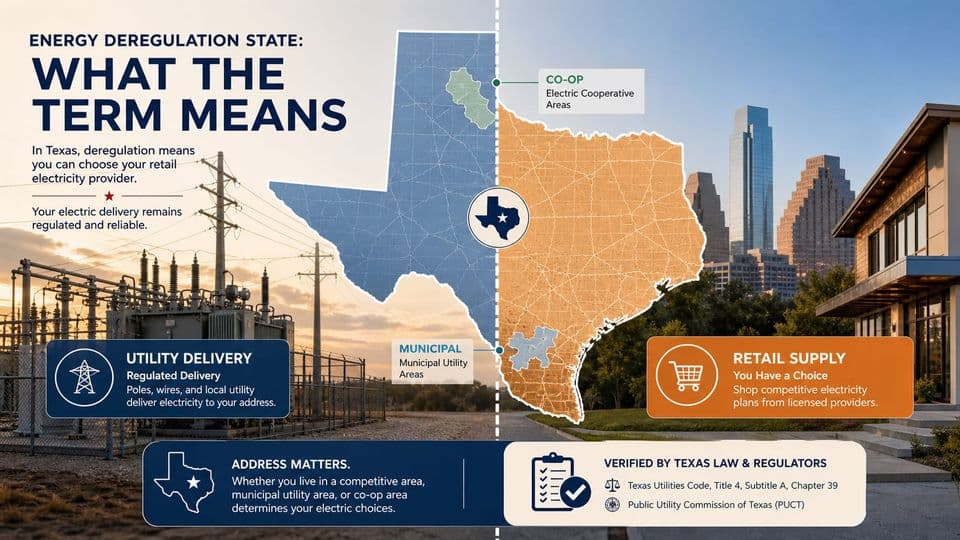
Key Takeaways
- 1An energy deregulation state usually allows some form of retail energy choice, but the details depend on the state, service type, utility territory, and customer class.
- 2Electricity deregulation and natural gas deregulation should be checked separately because they do not always follow the same rules.
- 3Many Texas electricity customers are in retail choice areas, but municipal utility and electric cooperative areas can work differently.
- 4Deregulation does not remove the local delivery utility from the electricity system.
- 5State-by-state deregulation counts can differ because sources may count full, partial, limited, electricity-only, gas-only, or combined programs.
An energy deregulation state is not simply a place where every customer can choose every energy company. The term usually refers to retail energy choice, and the details can change by state, service type, utility territory, and customer class.
What an energy deregulation state means
The phrase describes a state that has opened at least part of its energy market to competition. In practice this most often affects the retail supply side of electricity service while leaving delivery infrastructure and oversight under regulatory control.
The competitive part is usually retail supply
Retail competition lets eligible customers select the company that sells them electricity service. The seller handles the contract and pricing, yet the physical flow of power still travels through the existing grid.
The regulated part may still be delivery
Even where retail sellers compete, the poles, wires, meters, and maintenance crews often remain the responsibility of a regulated delivery utility. That separation keeps the local network under continued public oversight.
Retail choice and utility delivery are different jobs
Retail electricity choice focuses on the seller side of the transaction. Delivery service focuses on the physical system that brings power to the meter. These two functions use different companies and different rules.
Retail Electric Providers sell service in competitive areas
Where allowed, a Retail Electric Provider offers service plans to customers. The provider handles metering data, billing for the energy portion, and supply contracts. The provider does not own or repair the local wires.
Transmission and Distribution Utilities maintain local infrastructure
The Transmission and Distribution Utility owns and operates the poles, wires, substations, and meters that connect homes and businesses to the grid. This utility continues its regulated role regardless of which retail seller a customer chooses.
Texas rules split competitive areas from local exceptions
Texas statutes created a framework for retail electricity choice in many parts of the state. The same statutes recognize that certain local utilities operate under separate chapters and different oversight structures.

Municipal utility areas can follow Chapter 40
Municipal utilities in Texas can choose whether to open their service territory to retail competition under Chapter 40. Many keep their own generation and supply arrangements, so your address matters when deciding which rules apply.
Electric cooperative areas can follow Chapter 41
Electric cooperatives fall under Chapter 41. Their members decide governance and service rules through the cooperative board. These areas frequently maintain their own supply options separate from the competitive market.
State lists change when electricity and natural gas are mixed
Lists of deregulated energy states often combine electricity and natural gas data or treat the two fuels separately. A single headline count can hide those differences and lead to mismatched expectations.
Electricity choice is not the same as natural gas choice
A state may allow retail choice for electricity without a parallel retail choice program for natural gas. The reverse also occurs. Checking the specific fuel avoids mixing the two categories.
A single count may hide different rules
Some sources track full retail markets, limited programs, or customer-class restrictions. Others count only one fuel. Those varied definitions explain why published state totals rarely match exactly.
Limited-choice labels need a closer look
The word limited appears on many maps and summaries. It usually signals that choice exists only under certain conditions rather than for every address or every customer type.
Caps and enrollment windows can limit choice
Some programs restrict total participants or operate only during set enrollment periods. These practical limits mean everyday availability can differ from the headline deregulation label.
Commercial-only programs should not be treated like residential choice
A market labeled limited may apply only to businesses above a certain size or usage level. Residential customers in the same state may face different access rules.
Customer class and service territory can change the answer
Rules for residential customers, small businesses, and larger commercial accounts are not always identical. Utility territory boundaries can matter more than the state name when determining options.
Residential and business access may differ
A state may grant residential retail choice in one set of territories while offering different or additional options to commercial accounts. The distinction follows statutory language and local utility decisions.
A service address can decide which rules apply
Two homes a few miles apart can sit in different utility territories. One address may fall under competitive retail rules while the neighboring address follows municipal or cooperative structures.
Regulators still oversee parts of the market
Deregulation reassigns certain roles but does not remove oversight from the system. Public utility commissions and statutory provisions continue to govern delivery service and market conduct.
PUCT oversight does not end with retail competition
In Texas the Public Utility Commission of Texas retains authority over transmission and distribution rates, reliability standards, and consumer protections. Retail competition changes who sells energy but leaves those core duties intact.
Official consumer pages are better than dated summaries
Statutes, commission orders, and current regulator pages reflect current rules more accurately than older market summaries. Checking the primary sources prevents reliance on outdated scope descriptions.
Outages and wires stay with the delivery utility
Retail competition changes the seller of electricity service but does not reassign responsibility for the physical delivery system. Customers still contact the local delivery utility for outages and infrastructure issues.
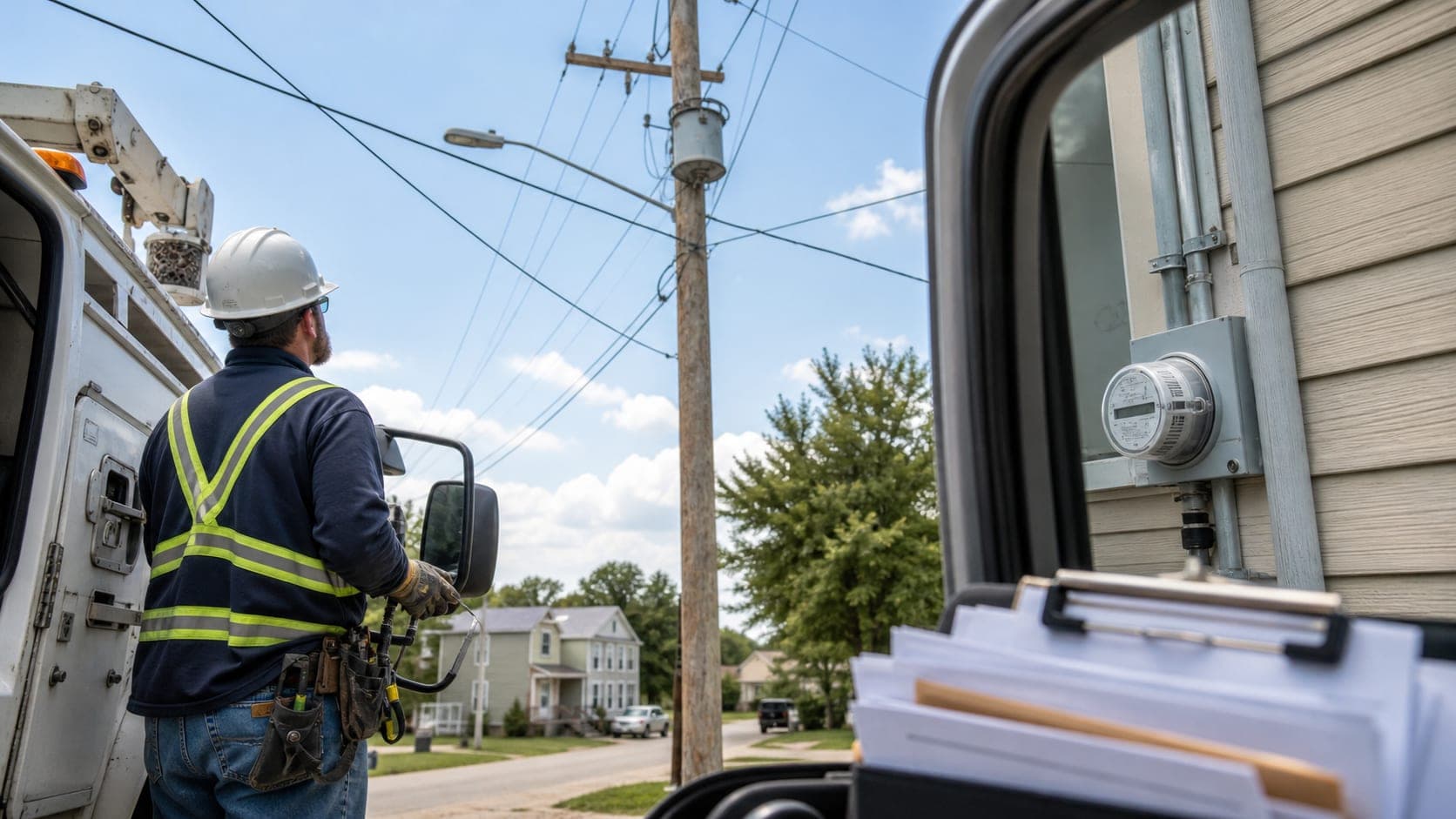
Delivery utilities handle local poles, wires, and meters
The utility that owns the distribution equipment responds to line damage, meter problems, and restoration work. Retail sellers do not maintain or repair that equipment.
Retail choice does not assign outage responsibility to every seller
When power goes out, the delivery utility manages the response using its crews and equipment. Customers in competitive areas still reach the same local utility for those events.
Energy Deregulation FAQ
Related Texas Electricity Guides
Editorial standards
SlashPlan publishes independent guidance to help Texans compare electricity plans. Our editorial team reviews each article without advertiser influence. See our editorial guidelines and monetization disclosure.
About the author
Roi CahanaEnergy advisor helping Texans better understand their electricity options and make more confident decisions. Focused on simplifying electricity plans, explaining confusing terms, and sharing practical guidance to help readers avoid common mistakes when comparing rates, contracts, and renewals.
Ready to compare plans?
Enter your ZIP code to see electricity plans available at your address.