The Eastern Interconnection and Texas Electricity
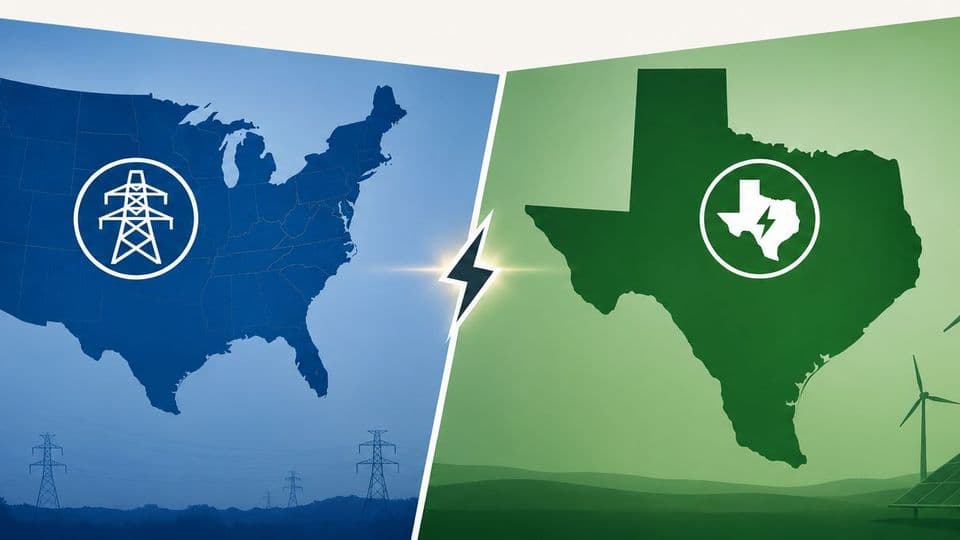
The Eastern Interconnection is a major North American power grid, but most Texas electricity shoppers are served through the separate Texas Interconnection associated with ERCOT.
Key Takeaways
- 1The Eastern Interconnection is a large synchronized AC grid, not a retail electricity provider or plan.
- 2Most Texas electricity shoppers are in the separate Texas Interconnection associated with ERCOT.
- 3Separate grids can exchange limited controlled power through DC ties, but that does not make them one synchronized grid.
- 4Grid reliability context helps explain Texas, but plan choice still depends on address, usage, delivery charges, fees, and contract terms.
- 5Use the Electricity Facts Label, Terms of Service, and Your Rights as a Customer disclosure before choosing a Texas electricity plan.
Quick answer for Texas shoppers
The Eastern Interconnection is a large synchronized power grid that covers much of eastern North America. It is not an electricity provider, utility, or plan type that a Texas shopper can sign up for.
Most Texas customers receive service through the separate Texas Interconnection that operates with ERCOT. This background explains why Texas grid operations differ from the rest of the country, yet it does not change how you compare plans at your specific address.
When you shop, focus first on the service address, your monthly usage pattern, the local delivery utility, and the details inside the plan documents. Check the Electricity Facts Label, Terms of Service, and Your Rights as a Customer disclosure before you decide.
Grid region, utility, provider, and plan are different things
An interconnection describes the physical reach of a synchronized power grid. A utility delivers power to your meter. A retail provider sells you a plan. These remain separate layers even when the grid is large.
What this changes when you compare plans
The interconnection you sit on sets basic reliability rules and how power can move in or out during tight conditions. It does not set the rates, fees, or contract terms that appear on your bill. Those come from the provider you choose and the delivery charges regulated in your area.
What the Eastern Interconnection actually is
The Eastern Interconnection is a large alternating-current grid that keeps many utilities operating in the same electrical rhythm under normal conditions. That shared rhythm runs at an average frequency of 60 Hz.
Utilities inside this interconnection balance supply and demand together instead of each one running in complete isolation.
The synchronized 60 Hz idea in plain English
Think of 60 Hz as the steady beat that all connected generators and transmission lines follow. When the system stays balanced, lights and appliances receive steady power without obvious flicker or drops. If the beat drifts too far, automatic protections trip equipment to prevent wider damage.
The footprint and the major exclusions
This grid stretches from central Canada down the East Coast and into parts of the Midwest and South. Quebec runs its own system, and most of Texas runs separately, so those areas do not share the same synchronized alternating-current connection under everyday operation.
Where Texas fits: ERCOT and the Texas Interconnection
The Texas Interconnection covers most of the state and stays electrically separate from the Eastern Interconnection during normal operations. ERCOT manages supply, demand, and transmission planning inside that Texas grid.
A small number of addresses near state lines or in certain municipal systems may follow different rules, so the service address always determines which plans and delivery charges apply.
Most Texas customers are not on the Eastern grid
Because the two grids do not share synchronized alternating current, power cannot flow freely back and forth the way it does inside one interconnection. Shoppers in ERCOT territory see this separation reflected in how reserves and emergency procedures are managed.
What ERCOT has to do with the Texas Interconnection
ERCOT coordinates the real-time market and reliability planning for the Texas Interconnection. It does not sell retail plans, but the market results it produces help set the wholesale prices that retail providers buy from.
Why your service address still matters
Confirm the exact service address before comparing offers. A few Texas locations sit outside standard ERCOT territory and may have only one provider or a different set of plan options.
How separate grids still trade limited power
The Eastern Interconnection and the Texas Interconnection can exchange power, but only in controlled amounts through high-voltage direct-current ties. These links act like valves rather than a shared synchronized system.
DC ties are controlled links, not a shared grid
Power moves across a DC tie in one direction at a time and under operator direction. The transfer does not make the two alternating-current grids lock together at 60 Hz.
Why limited transfers matter during tight supply
When ERCOT faces high demand or low generation, the amount of outside power that can arrive through DC ties stays limited by the capacity of those links and by contracts already in place. That constraint can keep prices higher than they would be inside a single large synchronized grid.
Who runs the grid inside the Eastern Interconnection
Several regional organizations coordinate operations inside the Eastern Interconnection. PJM, MISO, and NYISO each manage portions of the grid, balancing supply and transmission reliability for their members.
RTOs and ISOs are grid operators, not retail providers
These entities do not sell electricity plans to homes or businesses. A Texas shopper cannot choose PJM or MISO as a retail provider.
Where reliability planning fits
NERC sets reliability standards that apply across interconnections. Those standards shape how operators prepare for peak demand and equipment failures, yet they leave retail rates and contract terms to state regulators and providers.
How electricity moves through a large interconnection
Electricity starts at generation sources, travels long distances on high-voltage transmission lines, then steps down for local distribution lines that reach homes and businesses.
Generation sources feed the system
Power plants using natural gas, coal, nuclear fuel, hydro, wind, and solar all connect to the same transmission network in varying proportions depending on the region and time of day.
Transmission is not the same as your local delivery charge
High-voltage transmission moves bulk power across the interconnection. Regulated delivery charges on a Texas bill cover the local poles, wires, and substations that bring power from the transmission system to your meter. These charges appear separately from the energy rate in most plans.
Distribution is where your home connects
Distribution utilities own and maintain the final lines to your house. In Texas, these are often referred to as TDSPs and their rates stay the same no matter which retail plan you choose.
Reliability issues people hear about
Large interconnections face ongoing work on aging equipment, extreme weather preparedness, and the integration of variable resources such as wind and solar. Storage and faster dispatch help smooth those variations, but upgrades require planning and investment.
Older equipment and severe weather risk
Transmission and distribution assets built decades ago need replacement or hardening. Storms can damage lines and substations regardless of which interconnection serves an area.
Wind, solar, and storage in grid operations
A 2016 NREL modeling study examined higher shares of wind and solar on the Eastern Interconnection and found the system could remain stable with operational changes. Actual performance depends on continued improvements in forecasting, transmission, and storage.
What grid reliability does not guarantee on a bill
Reliable service reduces the chance of outages, yet it does not protect against sudden price spikes from fuel costs or limit the fees and early termination charges written into a retail contract.
How to use this when comparing Texas plans
Do not search for an "Eastern Interconnection plan" in Texas. Interconnections describe grid infrastructure; they are not products you buy at retail.
Start with your service address and the local delivery utility that serves it. Then compare only the plans offered in that area.
Do not shop for a grid. Shop for a plan available at your address
Enter the service address on a comparison site or provider portal so the results reflect the correct delivery charges and available offers.
What to check on the Electricity Facts Label
Look at the advertised rate at your expected usage level, any base charge, how the energy charge changes with usage tiers, the estimated delivery charges, contract length, early termination fee, and any bill credits or renewable content.
A simple decision path before choosing
Run the numbers for your actual monthly usage across a few plans. A fixed-rate plan can lock the energy charge while regulated delivery charges can still change. Choose the option whose total estimated bill and contract terms best match how and when you use power.
Eastern Interconnection FAQs
Sources & References
Editorial standards
SlashPlan publishes independent guidance to help Texans compare electricity plans. Our editorial team reviews each article without advertiser influence. See our editorial guidelines and monetization disclosure.
About the author
Roi CahanaEnergy advisor helping Texans better understand their electricity options and make more confident decisions. Focused on simplifying electricity plans, explaining confusing terms, and sharing practical guidance to help readers avoid common mistakes when comparing rates, contracts, and renewals.
Ready to compare plans?
Enter your ZIP code to see electricity plans available at your address.