Texas PUC: What Electricity Shoppers Should Know
The Texas PUC does not choose your electricity plan, but it shapes the rules behind plan disclosures, complaints, ERCOT oversight, outage guidance, and customer protections. Here is what shoppers should check before enrolling, switching, or filing a complaint.
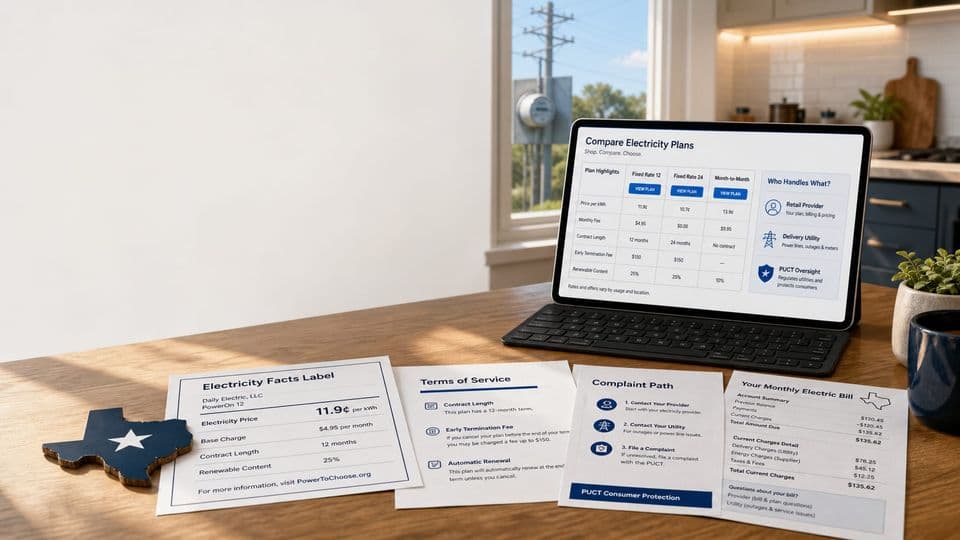
Key Takeaways
- 1The Texas PUC, also called PUCT, is the state utility regulator that affects electricity shoppers through market rules, customer protections, complaints, and ERCOT oversight.
- 2The PUC does not choose your retail electricity plan or guarantee the lowest bill, so shoppers still need to compare plan documents and total costs.
- 3For billing, contract, or provider service problems, contact the provider first and keep records before filing a PUCT complaint.
- 4For a power outage, contact your utility company because it handles local delivery equipment and restoration.
- 5The Electricity Facts Label, Terms of Service, and Your Rights as a Customer disclosure are the key documents to review before enrolling or switching.
Texas PUC Explained
The Public Utility Commission of Texas, often called the PUC or PUCT, is the state agency that regulates electricity along with water, wastewater, and telecommunications services. This article focuses on how its electricity role reaches shoppers.
PUC and PUCT refer to the same agency. The shorter name appears often in everyday conversation while the full name shows up in formal rules and documents.
Electricity shoppers run into PUCT rules through required plan disclosures, complaint options, and oversight of the competitive market even though the agency does not sell plans directly.
What the PUC Does Not Do for Shoppers
The PUCT does not pick the cheapest plan for any household or guarantee a specific rate. Shoppers must still compare the documents that list the actual charges they will pay.
Retail electric providers sell the plans, transmission and distribution utilities deliver the power, and ERCOT runs the grid that connects them. The PUCT sets and enforces the rules that govern how those pieces interact.
This separation keeps expectations clear before the later sections on complaints and contract terms.
How Deregulation Changed the PUC's Job
Many Texas areas moved from single-utility service to retail choice years ago. That shift changed the PUC's focus from setting all rates itself to enforcing market rules and consumer protections instead.
Not every part of the state participates in this competitive market. In areas that remain regulated, different rules apply and the PUCT role stays closer to traditional rate oversight.
Competition removed some charges from provider control while delivery charges and certain fees stayed under regulated utility tariffs.
PUCT, ERCOT, TDUs, and REPs: Who Handles What
The PUCT oversees rules, enforces compliance, handles consumer complaints, and maintains regulatory supervision of ERCOT. It does not operate the grid day to day.
ERCOT manages the bulk power system and wholesale market under that oversight.
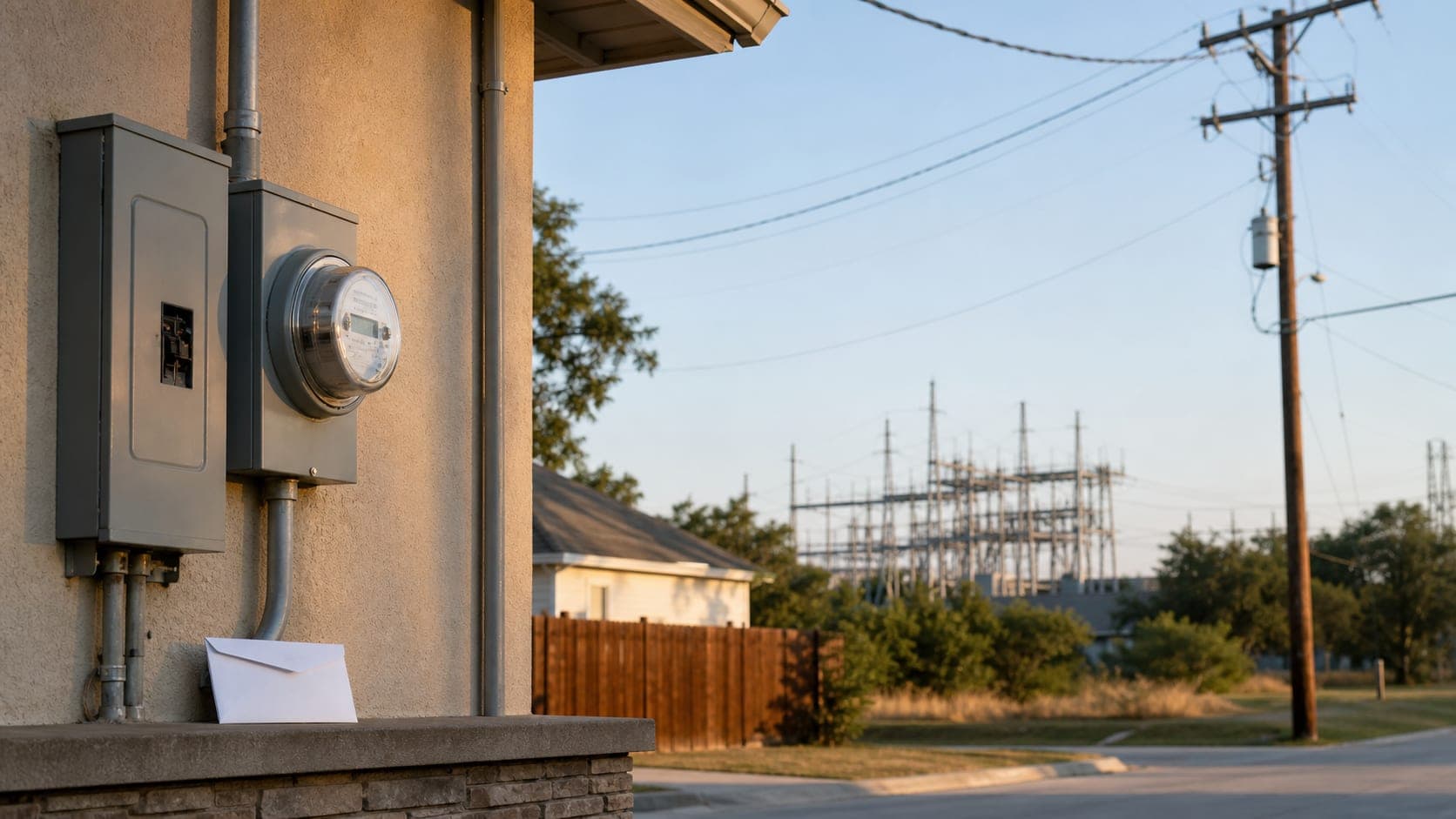
Transmission and distribution utilities own and maintain the local wires and equipment. They restore service after outages and pass through delivery charges on every bill regardless of which retail provider a customer chooses.
Retail electric providers sell plans, manage accounts, and issue the monthly bill in deregulated areas.
Where PUCT Rules Show Up on Your Electric Bill
The Electricity Facts Label is the required document that lists the energy rate, recurring fees, term length, and early termination charges for a plan. Review it before comparing advertised rates alone.
The Terms of Service and Your Rights as a Customer disclosure add the contract details and the formal complaint process that apply if a problem arises later.
A fixed-rate plan can lock the energy portion of the bill, yet delivery charges and certain regulatory fees can still change because the PUCT or the utility controls those components.
Base charges, usage credits, minimum-use fees, and early termination fees often create larger differences between plans than the energy rate itself.
Customer Rights to Check Before You Enroll
Texas shoppers have the right to clear plan information and the ability to switch providers in deregulated areas once contract terms allow.
Reading the full set of plan documents before signing prevents later surprises about fees or notice requirements.
Switching rights exist, but they depend on the end date of the current contract and any early termination fee listed in the Terms of Service.
Complaint Path: Provider First, PUCT Second
Contact the retail provider first when a billing, contract, or service issue appears. Keep records of dates, account numbers, and every written response.
An informal PUCT complaint becomes the next step after the provider has had a reasonable chance to resolve the problem and has not done so.
A formal complaint involves a more structured legal process and is not the first action most customers take.
When a plan simply no longer matches usage patterns, reviewing new options can resolve the issue faster than filing a complaint.
Outages and Severe Weather: Call the Right Company

Report a power outage to the utility company that owns the local poles and wires rather than to the retail provider listed on the bill.
The PUCT site lists utility contact information and storm resources for reference during widespread events.
The retail provider handles the bill but does not repair distribution equipment.
Switch Holds, Prepaid Service, and Bill Assistance
A switch hold can block a move to another provider until certain unpaid amounts are settled. Review account status before assuming a switch will go through.
Prepaid plans fall under additional PUCT consumer rules that cover notice requirements and disconnection timing. Balances and usage need closer tracking than in postpaid plans.
Bill assistance programs exist for payment difficulty. These resources address ability to pay rather than plan pricing.
Who Runs the PUCT and How Public Input Works
Five full-time commissioners appointed by the governor and confirmed by the Texas Senate lead the agency on staggered six-year terms.
Open meetings and workshops follow posted schedules that allow public attendance. Written public comments and rulemaking comments provide additional ways to participate.
Intervenor status and protestor filings apply when a party meets specific legal criteria for direct interest in a case. Casual observers generally use comment channels instead.
Winter Storm Uri and the PUC's Grid Oversight Role
Winter Storm Uri focused attention on PUCT decisions around emergency pricing, reliability standards, and ERCOT operations.
Later litigation and resulting rule changes form part of the public record on grid preparedness.
This was an extreme illustration on how regulatory choices on wholesale market design and winterization standards affect the retail plans available to customers.
Electricity First, but Not Electricity Only
The PUCT also maintains consumer resources for water, wastewater, and telecommunications services.
How to Use PUCT Information While Comparing Plans
Knowledge of PUCT rules helps separate a plan that simply costs too much from a provider service failure that may need a complaint.
Compare the estimated total bill at expected usage levels rather than the single advertised energy rate.
Check the Electricity Facts Label, Terms of Service, and Your Rights as a Customer disclosure during every plan review.
When leaving a provider after a dispute, confirm whether a switch hold, unpaid balance, or termination fee will affect timing.
Common Mistakes Texas Shoppers Make With PUC Issues
Filing a PUCT complaint before the provider has a documented chance to correct a billing error often adds delay.
Calling the retail provider during an outage routes the report to the wrong company and slows restoration.
Treating the advertised rate as the final bill amount overlooks fees, delivery charges, and usage patterns that change the actual cost.
Switching without reviewing the contract end date, termination terms, or possible switch hold can replace one problem with another.
Practical Next Step: Decide Whether to Shop, Complain, or Wait
Shop when the current plan remains valid but no longer matches usage, timing, or budget needs.
File a complaint when the provider has not resolved a documented billing, contract, disclosure, or service issue after direct contact.
Contact the utility company when the immediate problem involves an outage or local delivery equipment.
Gather documents and wait when the next action depends on a pending provider response or contract milestone.
Texas PUC FAQs
Editorial standards
SlashPlan publishes independent guidance to help Texans compare electricity plans. Our editorial team reviews each article without advertiser influence. See our editorial guidelines and monetization disclosure.
About the author
Roi CahanaEnergy advisor helping Texans better understand their electricity options and make more confident decisions. Focused on simplifying electricity plans, explaining confusing terms, and sharing practical guidance to help readers avoid common mistakes when comparing rates, contracts, and renewals.
Ready to compare plans?
Enter your ZIP code to see electricity plans available at your address.