How To Remove A Switch Hold
A switch hold can stop a Texas electricity switch until the account, meter, or move-in issue behind it is cleared. This guide explains who to call, what documents may help, and when a hold is not your debt.
Key Takeaways
- 1A switch hold can block a Texas electricity provider switch until the account, meter, or move-in issue behind the hold is cleared.
- 2If the hold is tied to your own unpaid balance or deferred payment plan, the REP that placed the hold is usually the first call.
- 3If you just moved in and the hold belongs to a previous occupant, ask the provider about a New Occupant Statement and prepare proof of residency.
- 4Meter tampering or theft-of-service disputes may need to go through the local TDU or TDSP because the issue is tied to the meter.
- 5Prepaid electricity is not a reliable workaround for an active switch hold, based on the researched source that addresses prepaid plans.
- 6After the hold is removed, compare Texas electricity plans by estimated bill impact and plan documents, not just the advertised rate.
A switch hold is a restriction attached to an electric meter, account, or service location. It prevents a customer from changing retail electricity providers until the underlying issue is resolved. Most holds are temporary, yet they stop enrollment, plan switches, prepaid sign-ups, and move-in requests at that meter.
Shoppers usually discover the hold when they try to start service or switch plans. The restriction stays in place until the provider or utility clears it.
What a switch hold does in Texas
A switch hold blocks the market transaction that moves service to a new provider. It does not cancel your existing service or erase the debt. Once the cause is fixed, the hold is removed and switching can proceed.
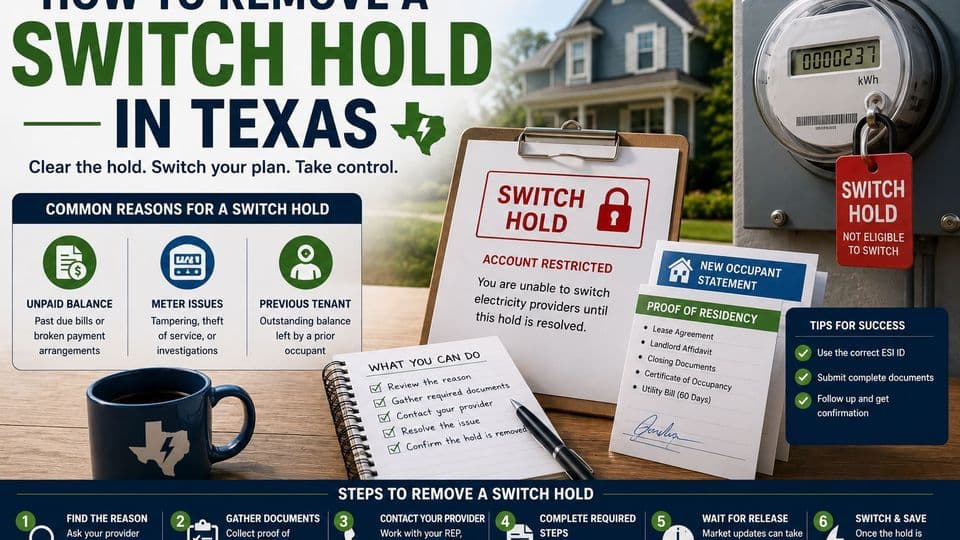
The hold can appear for several reasons. Payment problems, meter issues, or records left by a previous occupant are the most common triggers.
Why a switch hold may be on your address
A hold often traces to an unpaid balance or a missed payment under a deferred payment plan. In these cases the retail electric provider that placed the hold usually controls removal.
Meter tampering or theft-of-service flags create a different path. These disputes typically involve the local transmission and distribution utility or service provider because the issue sits at the meter itself.
A prior tenant's unpaid account can also leave a hold on the service location. New occupants then need to prove they are not responsible before the provider will release the meter for enrollment.
Is the hold yours or from a prior occupant?
Start by confirming whether you are the customer of record on the current or recent account. If the hold belongs to you or someone tied to the account, work directly with the provider that placed it.
If you recently moved in and have no connection to the previous account, treat the situation as a new-occupant case. You are not required to pay another person's balance. The provider will likely ask for proof that you are the new resident.
Landlords and property managers follow a separate route. They usually need to supply ownership or management documents to clear holds tied to vacant units.
How to remove a switch hold from your own unpaid balance
Contact the retail electric provider that placed the hold. Ask what exact balance, deposit, or agreement must be satisfied. Paying the amount in full is the most direct step in most cases.
After payment, keep the confirmation number and any written statement that the hold has been released. Removal is not always instant. Some providers report that market updates can take up to 72 hours, and timing can also depend on when the provider sends the release.
How a New Occupant Statement can help
A New Occupant Statement or New Occupant Confirmation shows the provider and the market that you moved in after the previous occupant left. This form lets the desired provider submit documentation on your behalf once you prove residency.
Requirements differ by provider. Some accept electronic signatures while others require original ink signatures. Match the instructions exactly to avoid delays or rejection.
Documents that can support a new-occupant request
Prepare one or more of the following documents:
- A signed lease that lists the service address and your name as tenant.
- A notarized landlord affidavit or property management letter.
- Recent closing documents if you purchased the home.
- A certificate of occupancy for new construction.
- A recent utility bill from another address in your name, often required to be dated within the last 60 days.
Submit the documents the provider requests in the exact format they specify. Incomplete packets or mismatched names are frequent reasons for delays.
Where your ESI ID fits into the process
An ESI ID is the 17 or 22-digit Electric Service Identifier assigned to the meter at your service location. It identifies the exact meter more reliably than a street address or unit number.
Use the ESI ID printed on your bill or provided during enrollment. Entering the wrong identifier can route documents to the wrong meter and extend the hold.
Who to contact: REP, TDU, or TDSP
Begin with the retail electric provider if the hold stems from an unpaid balance or deferred payment plan. That provider placed the restriction and can confirm what must be paid or corrected.
For meter tampering or theft-of-service flags, contact the local transmission and distribution utility or service provider. These entities handle investigations and meter-related releases.
New occupants should reach the retail electric provider they want to use. That provider can guide the New Occupant Statement and submission steps.
How to dispute a switch hold you believe is wrong
Gather proof before you call. Keep copies of the lease, payment confirmations, move-in records, landlord statements, and prior utility bills. Ask the provider which event triggered the hold, which company placed it, and what specific record needs correction.
Document every conversation with dates, names, and confirmation numbers. Follow up in writing if the initial response does not resolve the issue.
Meter-tampering disputes usually move to the transmission and distribution utility or service provider for investigation. The retail provider can direct you to the correct contact.
Can you switch providers if you owe money?
An unpaid balance does not always create an active switch hold immediately. You may still be able to switch before the hold is applied, though the final bill from the old provider will still include the balance.
Once a switch hold is active, enrollment cannot complete until the hold is lifted. A new provider may still request a deposit even after the hold clears.
Can prepaid electricity bypass a switch hold?
Prepaid plans still require a provider switch or new enrollment at the same service location. An active switch hold blocks that step, so prepaid enrollment is not available until the hold is removed.
After the hold clears, compare prepaid and postpaid offers by total estimated bill, fees, and deposit requirements rather than by rate alone.
What happens if you ignore the balance or payment plan
Nonpayment or missed payments under a deferred plan can lead to disconnection risk. Texas rules require providers to issue notices before service is interrupted, but readers should review their specific provider notices and check current PUCT resources for details.
Contact the provider early to discuss payment arrangements or assistance programs if money is tight. Early action can prevent the problem from escalating.
What to do after the hold is removed
Confirm with the provider that the hold has been released before you attempt another enrollment. Then compare plans using realistic monthly usage figures instead of advertised rates alone.
Read the Electricity Facts Label, Terms of Service, and fee schedules for any plan you consider. These documents show the actual charges that affect the bill.
Quick decision checklist
If the hold belongs to you, call the retail electric provider that placed it and ask what must be paid or corrected.
If you just moved in, ask the provider you want to use for the New Occupant Statement and prepare residency proof.
If the hold involves meter tampering, ask whether the transmission and distribution utility or service provider must investigate the meter issue.
If payment is difficult, ask about assistance or arrangements before service risk increases.
Switch Hold FAQs
Sources & References
Editorial standards
SlashPlan publishes independent guidance to help Texans compare electricity plans. Our editorial team reviews each article without advertiser influence. See our editorial guidelines and monetization disclosure.
About the author
Roi CahanaEnergy advisor helping Texans better understand their electricity options and make more confident decisions. Focused on simplifying electricity plans, explaining confusing terms, and sharing practical guidance to help readers avoid common mistakes when comparing rates, contracts, and renewals.
Ready to compare plans?
Enter your ZIP code to see electricity plans available at your address.