7 Unusual Ways to Save Energy and Money at Home
Small energy habits can add up when they target the places people often ignore: standby electronics, hot water, laundry heat, cooking heat, refrigerator strain, and cooling routines.
Key Takeaways
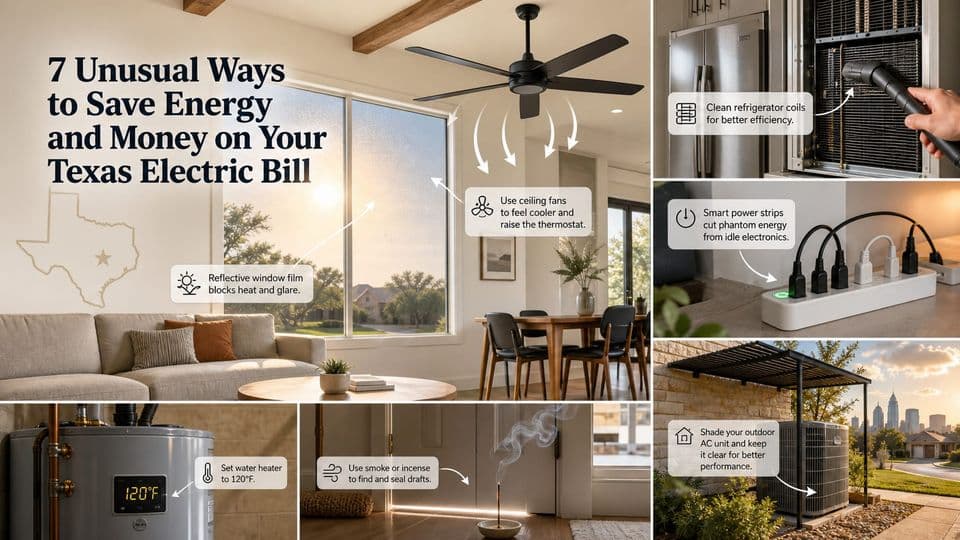
- 1The best unusual energy-saving ideas are small habits that people can repeat without making daily life harder.
- 2Standby electronics, dryer time, hot water, cooking heat, and refrigerator strain are easy places to overlook.
- 3Cooling the person first, such as with fans and shade, can reduce the urge to overcool a whole room.
- 4Cold-water laundry and air-drying selected items can reduce how often heat is used for cleaning clothes.
- 5Hot-water habits matter because showers, taps, dishwashing, and laundry can all connect water use to energy use.
- 6In Texas, comfort and safety come first. Energy-saving routines should never make indoor heat unsafe.
Most energy advice stops at the thermostat and the light switch. Those habits help, but they miss the smaller, less obvious places where homes waste power and money every day. If you are looking for unusual ways to save energy and money, the best place to start is the routine you already have. Small changes in how you handle laundry, cooking, hot water, and cooling can add up, especially in a climate where the air conditioner runs for months at a time.
This guide focuses on seven practical habits that target hidden energy use. None of these ideas require a new appliance or a complicated home upgrade. They are about spotting the heat, waste, and standby power that most people overlook until the electric bill arrives.
What makes an energy-saving tip worth trying
A good energy-saving habit is one you can repeat on a normal Tuesday. If a tip sounds good in theory but makes daily life uncomfortable or unsafe, it will not last. The most effective approach is to look for small leaks in your current routine and fix them one at a time.
Look for repeatable habits, not one-time chores
The goal is to find actions that fit your home without creating new work. Unplugging a single TV at the end of the night is easy. Unplugging every device in the house every morning is not. When a habit is simple to repeat, it becomes part of how you run your home instead of a task you have to remember.
Avoid tips that trade energy savings for safety
Energy savings should never come before health or safety. In Texas, that means keeping your home cool enough to avoid heat-related risks, especially for children, older adults, and pets. If a tip ever asks you to turn off a required medical device, ignore it.
If a cooling habit makes the house unsafe during a heatwave, stop and adjust. The right energy habit works with your life, not against it.
Hunt for standby power in plain sight
Many electronics keep drawing power as long as they are plugged in, even when you are not using them. This is often called standby power or vampire power. The reason is simple. Many devices stay in a low-power mode so they can wake up quickly, keep a display lit, or wait for a remote signal.
Find chargers, consoles, and small electronics that stay warm
Walk through your home and look for devices that feel slightly warm to the touch when they are supposed to be off. Game consoles, cable boxes, and some chargers are common examples. If a device has a standby light or a clock display, it is using energy. You do not need to unplug everything in the house. Focus on the spots where several devices sit close together, such as an entertainment center or a home office desk.
Use a power strip for clusters you can switch off
A power strip makes it easier to cut power to a group of devices at once. Instead of unplugging five different cords, you flip one switch. This works well for setups where you can safely turn everything off at the same time. Avoid using a power strip for devices that need to stay on for updates, recordings, or security. If you are not sure whether a device needs constant power, leave it plugged in and focus on the ones you use only for a few hours a day.
Cool the person before the whole room
When the weather turns hot, the first reaction is often to lower the thermostat. An alternative approach is to make yourself more comfortable so you do not need to overcool the entire house. This is not about suffering through the heat. It is about using fans, shade, and smarter clothing so the temperature feels manageable.
Pair fans with a modest thermostat setting
Ceiling fans and portable fans help move air across your skin, which makes you feel cooler. When you use a fan, you can often keep the thermostat a few degrees higher without feeling the difference. The key detail is that fans cool people, not rooms. If you leave a fan running in an empty room, it is not providing that benefit. Turn fans off when you leave the space.
Block afternoon sun before the room heats up
Sunlight streaming through windows can raise the temperature of a room quickly. Once the room heats up, the air conditioner has to work longer to bring it back down. Closing curtains or blinds during the hottest part of the day is a simple way to keep the heat out before it becomes a problem. This is especially helpful on west-facing windows where the late afternoon sun is strongest.
Use cold water in more laundry cycles
Heating water for laundry is a major source of energy use in many homes. You can reduce that demand by choosing cold water for loads that do not need a hot wash. Modern detergents are designed to work in cold water, which makes this an easier switch than it used to be.
Reserve hot water for loads that need it
Cold water works well for most everyday clothes, including items that are lightly worn or only need freshening up. Hot water is still the right choice for things like sweaty gym clothes, greasy work uniforms, or items that need sanitation. The goal is not to wash everything in cold water no matter what. The goal is to stop using hot water out of habit when a cold cycle would do the job.
Wash full loads when possible
A washing machine uses roughly the same amount of energy and water whether it is full or half full. Waiting until you have a full load means you run the machine less often. Be careful not to overload the machine, which can leave clothes unwashed and force you to run a second cycle. A normal full load is more efficient than two small ones.
Air-dry the laundry that slows the dryer down
Dryers use a large amount of energy because they have to heat air and tumble clothes at the same time. You do not have to give up your dryer to save energy. You only need to remove the items that take the longest to dry and air-dry those instead.
Hang heavy items that extend dryer time
Thick towels, heavy jeans, and hoodies can stay damp long after thinner items are dry. If you pull those pieces out and hang them up, the rest of the load will finish faster. This reduces the total time the dryer is running. It also helps your clothes last longer because heavy fabrics take a lot of wear and tear from repeated dryer cycles.
Clean the lint screen before each dryer cycle
A clogged lint screen restricts airflow, which forces the dryer to run longer and work harder. Cleaning the screen before every load is one of the simplest dryer maintenance steps you can take. It improves airflow, reduces drying time, and lowers the risk of overheating. This is a habit that takes five seconds and has a direct impact on how hard your dryer has to work.
Cook without making the kitchen fight the AC
Cooking with a full-size oven or a high-heat stovetop adds a lot of heat to your home. In the middle of a Texas summer, that extra heat makes your air conditioner run more often. Choosing how you cook based on the weather can keep your kitchen more comfortable and reduce the strain on your cooling system.
Choose smaller appliances for smaller meals
If you are making a simple weeknight dinner, a countertop appliance like a toaster oven, slow cooker, or air fryer often uses less energy than a full-size oven. More importantly, these smaller appliances release less heat into the room. On a hot day, keeping the kitchen cool is just as valuable as using less electricity to cook the food.
Batch oven cooking so heat is not wasted
When you do use the oven, try to cook multiple dishes at the same time. If you know you will need roasted vegetables and a baked casserole during the week, cook them together while the oven is already hot. Every time you preheat the oven, you are adding heat to the kitchen. Batching meals reduces how often you have to heat up the oven and cool down the house.
Keep the refrigerator from fighting warm air
Refrigerators run all day, every day. They are designed to handle normal use, but certain habits can make them work harder than necessary. The main issue is warm air. Every time you open the door, warm air rushes in. The fridge then has to use energy to cool that air back down.
Let hot leftovers cool safely before refrigeration
Putting hot leftovers straight into the fridge can raise the internal temperature and force the compressor to run more often. The key is to let food cool down to a safe handling temperature before you store it. Do not leave food out for hours, as that creates food safety risks. A short resting period on the counter is usually enough to take the edge off the heat before the container goes into the fridge.
Give vents and coils room to move air
Refrigerators need airflow to stay efficient. If the coils on the back or underneath are covered in dust, the unit cannot release heat properly. If the vents between the freezer and the fridge are blocked by large items or packaging, cool air cannot circulate the way it should. Keeping a few inches of space around the unit and checking the coils once or twice a year can help the fridge run more smoothly.
Cut hot-water waste at the tap
Water heating is a significant part of home energy use. The connection is simple. The more hot water you use, the more energy your water heater needs to keep the supply ready. Reducing hot-water waste at the tap is one of the most direct ways to lower that demand.
Use efficient fixtures when they fit the job
You do not need to replace every faucet in your home today. If a fixture is already old, leaking, or due for a replacement, look for options that use less water without reducing pressure. Low-flow aerators are inexpensive and easy to install. They reduce the amount of hot water that flows out while keeping the stream useful for washing hands or doing dishes.
Fix dripping hot-water taps quickly
A single dripping hot-water tap can waste gallons of water over a week, and every drop that drips out is water that your heater had to warm up. Fixing a drip is usually a simple repair, and it pays off by stopping both water waste and the energy used to heat that water. If you are not comfortable fixing it yourself, a plumber can often solve the problem in a short visit.
Fit the tips to long Texas cooling seasons
In many parts of Texas, the cooling season lasts for a large part of the year. That makes cooling-related habits some of the most valuable energy-saving steps you can take. The same habits that keep a home comfortable in August can also help in May and September.
Shift heat-producing chores away from peak afternoon heat
If you need to run the dishwasher, do a load of laundry, or use the oven, try to do it in the morning or evening when the house is naturally cooler. When you add heat to the home during the hottest part of the afternoon, your air conditioner has to fight that heat while the sun is beating down from outside. Spacing out heat-producing chores helps the house stay steady without constant cooling.
Protect comfort during extreme heat
There are days when no amount of fans or shading is enough. When the temperature outside is dangerously high, focus on keeping the home safe and cool. Energy-saving experiments should wait for milder weather. If you are ever uncomfortable or notice signs of heat stress in your home, adjust the thermostat and use the cooling you need.
Decide what to keep doing after one week
A long list of tips can feel overwhelming if you try to do everything at once. The better approach is to pick one or two habits that seem easy to start, try them for a week, and see how they fit your routine.
Track the changes people in the home will actually keep
The best energy-saving habit is the one you actually remember to do. If unplugging the entertainment center every night feels like a chore, try a power strip with a switch instead. If air-drying laundry is not realistic in your space, focus on washing full loads and cleaning the lint screen. Build a short list of habits that work for your home and let the rest go.
Revisit the list when seasons change
Your energy use changes with the weather. The tips that matter in July are not the same as the tips that matter in December. When the seasons shift, look at your routine again. You may find new opportunities to save energy in how you heat the home, how you wash winter clothes, or how you handle holiday cooking. Energy habits are not a one-time project. They are part of how you run your home all year.
Common Questions About Saving Energy at Home
Editorial standards
SlashPlan publishes independent guidance to help Texans compare electricity plans. Our editorial team reviews each article without advertiser influence. See our editorial guidelines and monetization disclosure.
About the author
Roi CahanaEnergy advisor helping Texans better understand their electricity options and make more confident decisions. Focused on simplifying electricity plans, explaining confusing terms, and sharing practical guidance to help readers avoid common mistakes when comparing rates, contracts, and renewals.
Ready to compare plans?
Enter your ZIP code to see electricity plans available at your address.