How to Stay Cool While Sleeping on Hot Nights
Hot nights can make sleep uncomfortable. Start with your body, your bedding, and the bedroom setup before lowering the thermostat again.
Key Takeaways
- 1Start with a heat-safety check. If a room feels dangerously hot or someone shows signs of heat illness, move to a cooler or air-conditioned place before relying on bedtime comfort tips.
- 2Use fans for personal airflow across the bed, not as a full replacement for safe cooling during severe heat.
- 3Cool the body before bed with practical steps such as a cool shower or bath, cool cloth, water, and loose lightweight sleepwear.
- 4Close direct-sun window coverings earlier in the day so the bedroom stores less heat by bedtime.
- 5Try lighter bedding layers before assuming you need a new sleep product.
- 6Humidity can make a room feel hotter because it affects how sweat cools the body.
A hot bedroom can turn a normal night into a restless one. Before you reach for the thermostat again, there are practical steps you can take that focus on your body, your bed area, and the way the room holds heat. The goal is to make the sleeper more comfortable, not to treat a dangerously hot room as a comfort project. If the space feels unsafe or someone shows signs of heat illness, move to a cooler or air-conditioned place and follow official heat-safety guidance.
Check whether the bedroom is safe enough for gradual cooling
Start with a basic safety check. Fans, lighter bedding, and small room adjustments are comfort tools. They are not substitutes for safe cooling when indoor temperatures become dangerous or when someone in the home is struggling with heat.
Know when fans and small changes are not enough
Fans help with personal comfort by moving air across your skin. They are not a full replacement for safe cooling during dangerous heat. If the room feels dangerously hot, or if anyone has symptoms of heat illness such as heavy sweating, weakness, dizziness, nausea, or headache, stop relying on bedtime cooling tips and move to a cooler or air-conditioned place.
Official heat-safety guidance from the CDC, the Red Cross, and the National Institutes of Health makes this point clearly. During extreme heat, the safest choice is to be in a cooler environment, not to keep adjusting pillows and sheets while the room remains unsafe.
Treat the tips that follow as practical comfort steps for hot but safe nights. If the bedroom crosses the line into unsafe, use a cooler room or an air-conditioned space instead.
Cool your body before you cool the room
One of the most effective ways to feel cooler at bedtime is to lower your own body temperature first. This does not require a special product or a new mattress. It starts with simple, low-cost steps that help you feel more comfortable before you even get into bed.
Use cool water, cloths, and hydration
A cool shower or bath before bed can help you feel cooler as you settle in for the night. Cool cloths on the skin and drinking water during hot weather also support comfort. These steps are recommended in official heat-safety guidance because they help the body manage heat more effectively.
Do not expect a cool shower to act as a guaranteed sleep treatment or a cure for insomnia. Think of it as a practical way to feel cooler so your body is not fighting trapped warmth when you try to fall asleep.
Pair cool-water steps with loose, lightweight sleepwear. When your clothing is light and loose, warmth is less likely to build up close to your skin. This combination of cooling your body and removing extra layers gives you a better starting point than jumping straight to thermostat adjustments.
Decide what the AC actually needs to handle
It is reasonable to try body cooling, airflow, shade, and lighter bedding before lowering the thermostat if the room is safe. Many hot nights can be made more comfortable with these steps alone. The key is to be honest about the room conditions and about how your body is handling the heat.
Avoid fighting dangerous heat with comfort tricks
If the bedroom feels unsafe, or if the indoor temperature is very high, do not try to tough it out with fans and lighter sheets. Use the air conditioning or move to a cooler place. Air conditioning exists for exactly this reason, and heat-safety guidance is clear that fans are not enough during dangerous heat.
When the room is hot but safe, try the comfort sequence first. Cool your body, aim airflow across the bed, block daytime sun, and use lighter bedding. If the room is still uncomfortable after those steps, then adjust the thermostat. This order keeps you safer and helps you avoid automatic thermostat changes that you may not actually need.
Keep energy-use awareness general. More cooling demand means the cooling system works more. The article will not make bill-impact claims, promise savings, or discuss electricity rates and plans. This is about nighttime comfort and heat safety, not about shopping for a lower bill.
Aim fans across the bed area
Fans are personal comfort tools. They make you feel cooler when air moves across your skin, but they do not actually lower the room temperature in a meaningful way during dangerous heat.
Place airflow where your body can feel it
Put the fan so the air moves across the bed area where you actually sleep. A small oscillating fan aimed across the bed works better than a fan blowing into an empty corner. The point is to create personal airflow that helps with comfort, not to try to cool the whole room.
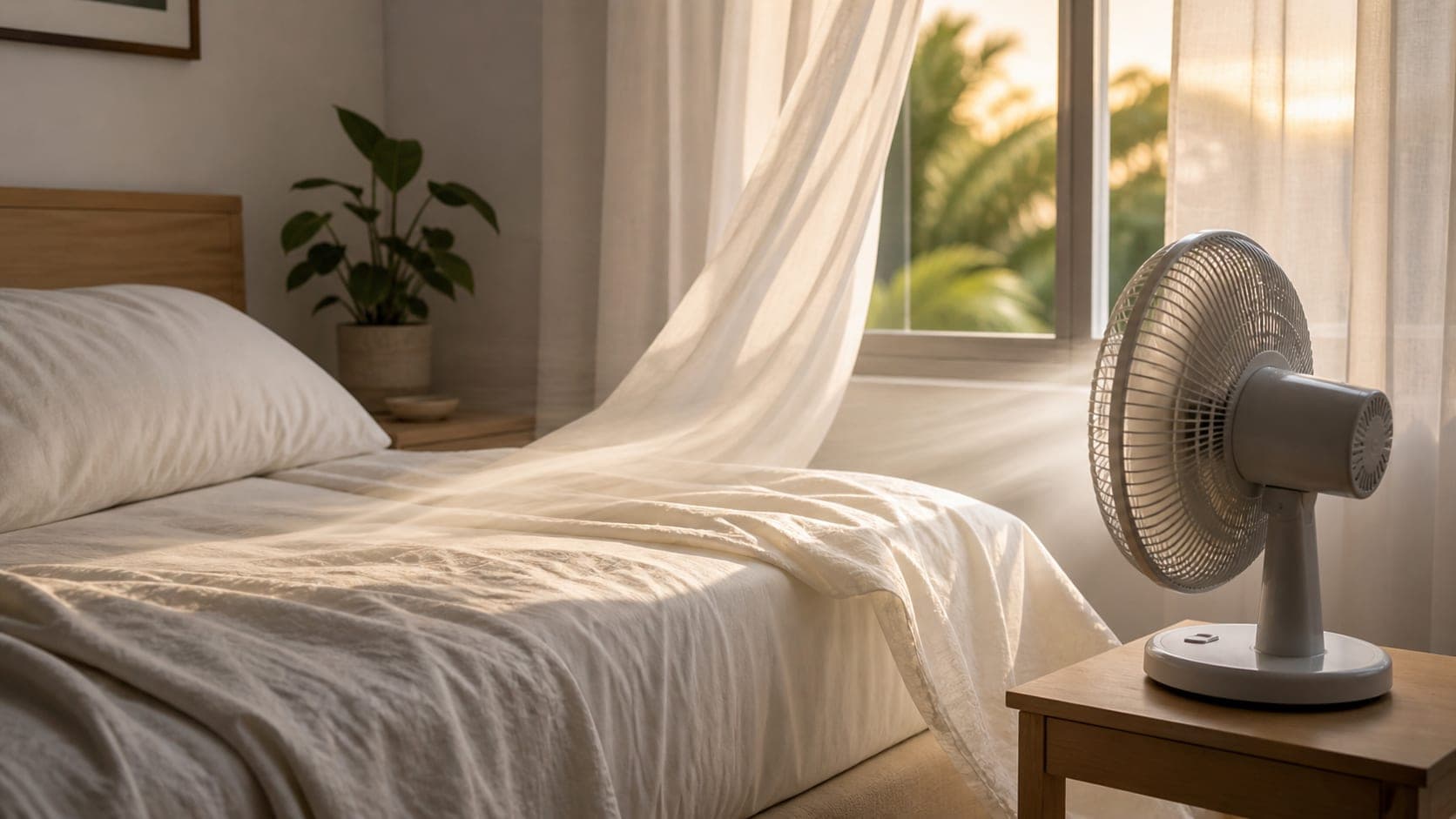
Remember the plain-language rule that fans cool people, not rooms. During dangerous heat, a fan alone is not enough. Use a cooler or air-conditioned place if the room becomes unsafe. On hot but manageable nights, fan airflow across the bed can make a real difference in how comfortable you feel.
If you want a short-term comfort boost, placing a bowl of cool water or ice near the fan can create a small local cooling effect close to the bed. Treat this as a comfort trick, not true room cooling. It will not change the overall room temperature in any meaningful way.
Open windows only when outdoor air helps
It sounds logical to open a window at night when the house feels stuffy. The catch is that outdoor air is not always cooler or more comfortable than indoor air, especially in hot climates and during heat waves.
Skip cross-breeze when it pulls heat inside
Open windows only when the outdoor air is cooler or otherwise more comfortable than the air inside the bedroom. If the air outside is hotter, more humid, or smoky, opening windows can pull more heat into the room instead of making sleep easier.
Cross-ventilation may help when the temperature drops at night and the outdoor air feels pleasant. Walk outside for a minute and compare how it feels. If the outdoor air feels worse than the indoor air, keep the windows closed and rely on airflow from fans inside the room.
This simple check prevents the common mistake of opening windows in the hope of a breeze, only to wake up in a room that feels even hotter and more humid.
Block sun before the bedroom stores heat
A bedroom that bakes in afternoon sun will take hours to cool down after sunset. The most effective time to act is earlier in the day, before the room stores that heat.
Close direct-sun coverings early
Closing window coverings on windows that get direct sun can help reduce unwanted solar heat gain in the bedroom. This is not a new trick. The U.S. Department of Energy notes that window attachments and coverings can reduce heat gain when used on sun-exposed windows.
Pay special attention to west-facing bedrooms, upstairs rooms, and any bedroom with large windows that face the afternoon sun. Closing blinds, curtains, or shades earlier in the day keeps the room from becoming a heat trap by bedtime.
If the bedroom is already hot at sunset, closing coverings after the sun goes down still helps by keeping warm outdoor air away from the glass and by blocking any remaining radiant heat from streetlights or neighbors' lights if they generate warmth.
Move to a cooler sleeping spot when needed
Sometimes the usual bedroom stays too hot even after you try airflow, lighter bedding, and window coverings. In that case, the most practical step is to change where you sleep, at least for part of the night.
Use downstairs or shaded rooms when safe
If your home has a lower, cooler, or more shaded room, try sleeping there when the normal bedroom becomes unbearable. Downstairs rooms often stay cooler because heat rises. Rooms on the shady side of the house can also hold less heat than sun-exposed bedrooms.
If the heat feels unsafe, prioritize an air-conditioned location. Many communities open cooling centers during heat waves. Official heat-safety guidance recommends finding air-conditioned spaces during dangerous heat, not relying on fans and household comfort tricks.
Do not feel that you need to tolerate dangerous heat to avoid running the AC. The point of these tips is to make hot nights more comfortable, not to turn heat safety into a test of endurance.
Wear loose sleepwear in lighter layers
What you wear to bed matters on hot nights. Tight clothing and heavy layers hold warmth close to your body and make it harder for you to feel comfortable.
Start with lightweight fabrics close to skin
Official heat-safety sources recommend lightweight, loose clothing during hot weather. The same idea applies at bedtime. Loose sleepwear made from lighter fabrics helps reduce warmth trapped close to the body.
Avoid tight pajamas, heavy robes, or multiple layers that you will not be able to adjust once you are under the covers. If you tend to wake up feeling too warm, start with the lightest setup that still feels comfortable and modest for your situation.
There is no single fabric that works for every sleeper. Treat fabric choice as a personal comfort test. The goal is to avoid heavy, tight clothing that holds heat, not to chase a specific material because a product advertisement claims it is the coolest option.
Replace heavy bedding with adjustable layers
A heavy comforter can turn a warm night into a sweaty one. The problem is not usually the material itself. The problem is that one heavy layer gives you no way to adjust during the night.
Keep one light sheet or blanket ready
Replace a single heavy comforter with lighter, adjustable layers. A light sheet or a thin blanket is easier to kick off or pull back up as your body temperature changes during the night.
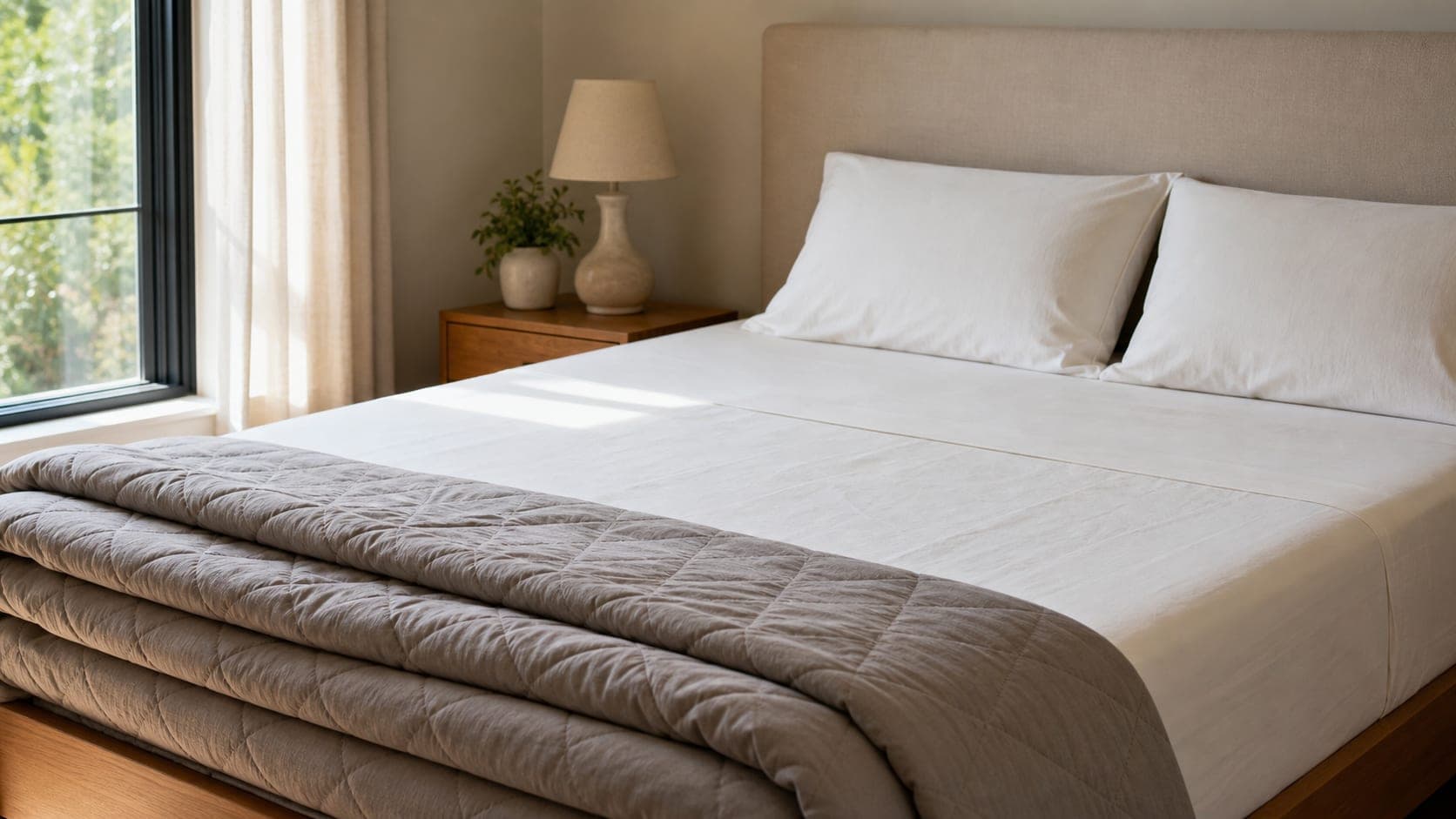
Fold the heavy comforter and place it at the foot of the bed or move it to a closet. Knowing it is available can be reassuring, but keeping it as the only option on the bed almost guarantees that you will overheat at some point during the night.
The practical decision is to start lighter and add a layer only if needed. Most hot sleepers find that they sleep more comfortably when they can adjust their bedding in small steps instead of being stuck with one heavy layer.
Treat bedding materials as comfort tests
After you switch to lighter layers, you may wonder about specific fabrics. You will see many product claims about which material sleeps coolest. The reality is more personal and less product-driven.
Skip one-fabric-fits-everyone advice
Avoid advice that says one fabric is always cooler for every sleeper. Cotton, linen, bamboo, wool, and synthetics each feel different against the skin, and each sleeper has personal preferences and sensitivities.
If you want to test fabrics, use items you already own. Try a cotton sheet, then try a linen sheet, and notice which one feels better on hot nights. Treat this as a comfort test, not a buying list. The best bedding for hot sleepers is the one that helps you feel comfortable and adjustable, not the one with the most marketing claims.
Avoid brand-specific bedding claims, rankings, or performance promises. The difference between a hot night and a cooler night usually comes down to layers and adjustability, not a single miracle fabric.
Check humidity and small heat sources
Some bedrooms feel hotter and more uncomfortable than the thermometer suggests. Humidity is a big reason why. Relative humidity affects how hot conditions feel, and very humid weather can make sweating less effective as the body's cooling mechanism.
Humidity changes how sweat cools the body
When the air is humid, sweat does not evaporate as easily. Because evaporation is what actually cools the skin, humid air can make a bedroom feel more oppressive even if the temperature has not changed.
If the room feels sticky, prioritize airflow, lighter layers, and a cooler place when needed. A fan can help with personal comfort in humid conditions, but remember that fans are not a replacement for safe cooling during dangerous heat.
Also check for small heat sources near the bed. If a lamp, charger, or device feels warm, moving it away from the bed area can be a small comfort check. This will not cool the whole room, but it can reduce unnecessary warmth close to where you sleep.
Do not expect these small checks to transform the room. They are minor adjustments that can help a little, especially when combined with the bigger steps like airflow, shade, and lighter bedding.
Make a backup plan for the hottest nights
Bedtime cooling tips have limits. On the hottest nights, no amount of fan adjustment or sheet swapping will make an unsafe room safe. That is why it helps to have a backup plan before the bedroom becomes unbearable.
Identify a cooler room or an air-conditioned place you can use when the temperature rises. This could be a downstairs living room, a basement, a friend's home, a public library during the day, or a community cooling center during a heat wave.
Choose the safest available place, then return to lower-stakes comfort changes when the weather cools down. The tips in this article are meant for hot but safe nights. When heat becomes dangerous, the only responsible choice is to be in a cooler environment.
If you are unsure whether the room is safe, follow official heat-safety guidance and err on the side of caution. It is better to sleep in a cooler room for a few nights than to risk heat illness by trying to make an unsafe bedroom work with fans and light sheets.
FAQs About Staying Cool While Sleeping
Sources & References
Topics
Editorial standards
SlashPlan publishes independent guidance to help Texans compare electricity plans. Our editorial team reviews each article without advertiser influence. See our editorial guidelines and monetization disclosure.
About the author
Roi CahanaEnergy advisor helping Texans better understand their electricity options and make more confident decisions. Focused on simplifying electricity plans, explaining confusing terms, and sharing practical guidance to help readers avoid common mistakes when comparing rates, contracts, and renewals.
Ready to compare plans?
Enter your ZIP code to see electricity plans available at your address.