Demand Charges Explained for Electric Bills
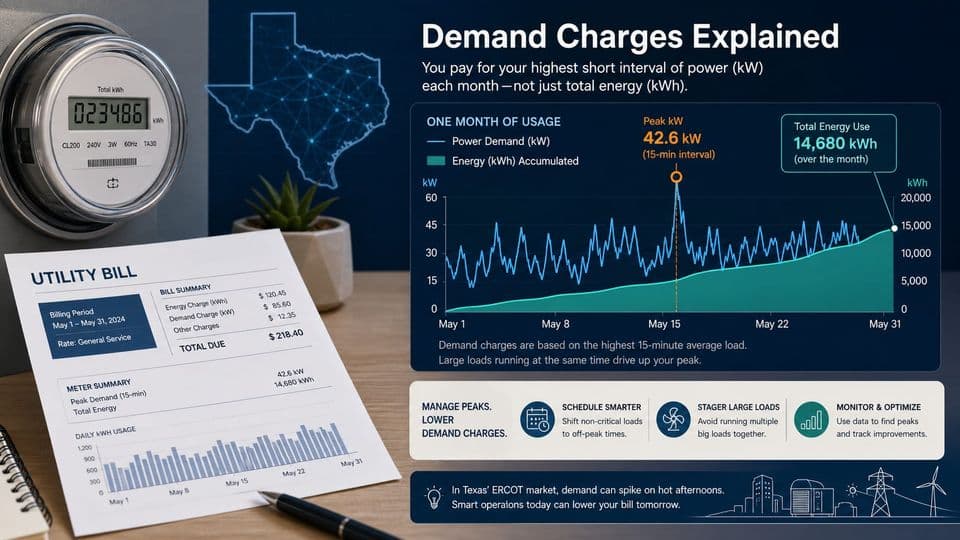
Demand charges are tied to the highest rate of electricity use during a billing period, not just the total electricity used. The details depend on the account, meter, tariff, and official billing rules.
Key Takeaways
- 1Demand charges are based on the rate of electricity use, not just total electricity consumed.
- 2kW measures rate of use, while kWh measures total use over time.
- 3Billing demand is typically tied to the highest measured demand interval for the billing period, but the exact method depends on the applicable meter and tariff.
- 4High demand often comes from several large loads operating at the same time.
- 5Staggering equipment, scheduling high-load work, controls, efficiency improvements, and monitoring can help manage peak demand.
Demand charges focus on the highest rate of electricity use during a billing period. They appear on certain electric bills as a separate line item tied to how much power is required at once rather than the total amount consumed.
Demand Charges Measure Peak Power
A demand charge is based on the rate electricity is delivered or used at a specific instant or averaged over a defined period during the billing cycle. This differs from charges that track overall consumption across the entire month.
Peak rate of use, not total use
The charge reflects the maximum power draw recorded rather than the cumulative total of electricity supplied. A facility that uses 50,000 kWh spread evenly may face a lower demand charge than one where the same total arrives in concentrated bursts.
kW and kWh Answer Different Questions
kW measures the rate of electricity use at a point in time. kWh measures the total electricity used over time. The two units answer separate questions about an account.
Rate of use and total use are not the same
Think of kW as the speed shown on a speedometer while kWh is the distance traveled. A meter records both values, but the demand portion of a bill uses the kW figure.
Demand, Energy, and Base Charges Have Different Jobs
An energy charge is based on total electric energy consumed in kWh. A base charge is a monthly charge that applies regardless of the amount of kWh used. A demand charge follows the highest rate of use.
PUCT bill terms that readers often mix up
The Public Utility Commission of Texas glossary separates these three line items so customers can identify which part of their bill responds to different behaviors. For a broader walkthrough of bill sections and line items, see How to Read Your Electricity Bill in Texas.
Business Accounts Are the Main Use Case
Demand billing appears most often where several large electrical loads can operate at the same time. Commercial customers with larger simultaneous loads may require more capacity from the system.
Billing Demand Comes From Metered Intervals
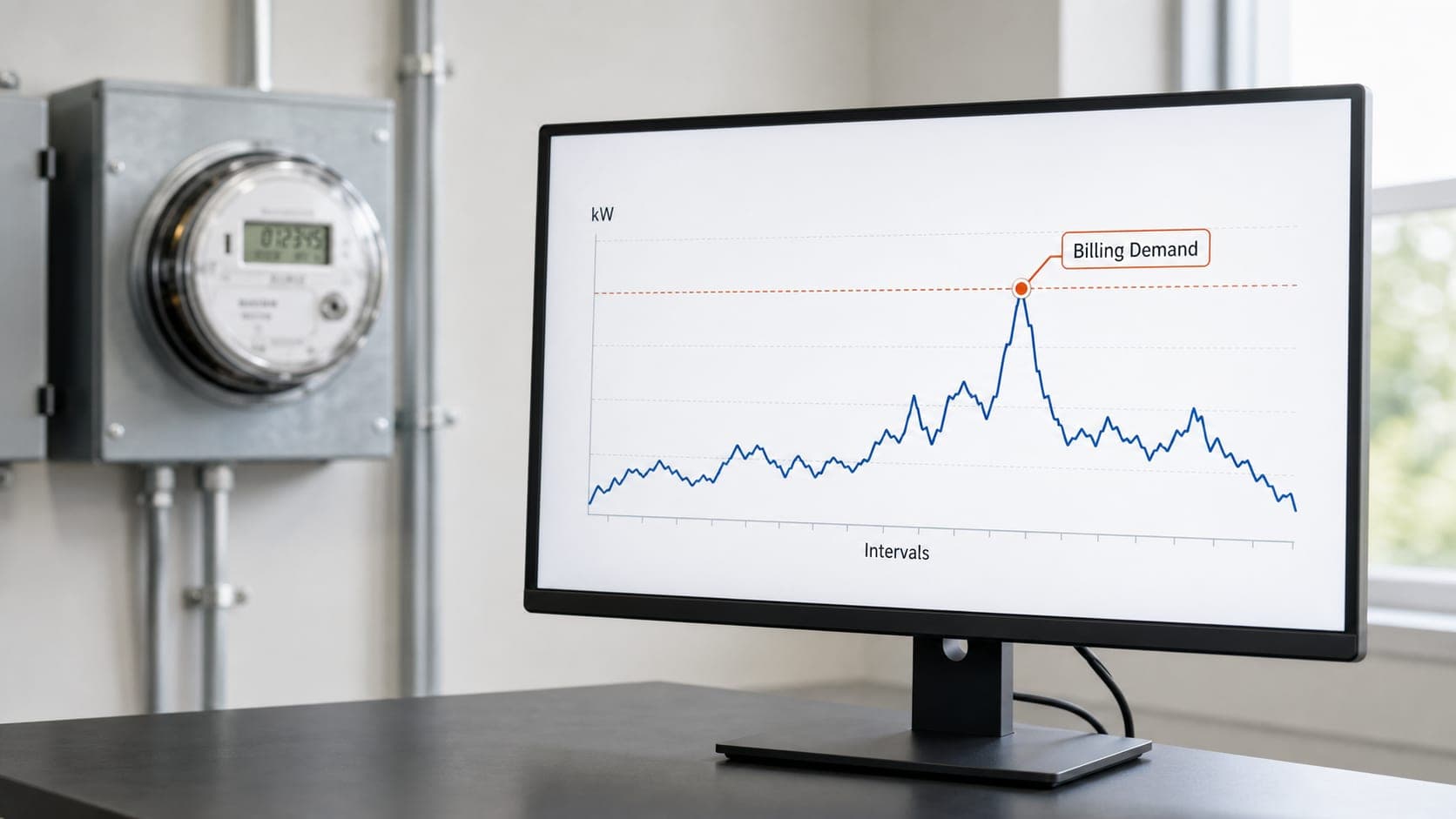
Commercial meters may measure demand during intervals across the billing cycle. Billing demand is typically based on the highest measured demand interval during that cycle.
Interval length must come from the tariff or meter rules
The exact interval length used for any account is set by the meter standards and tariff language that apply to the service. No universal interval applies to every Texas demand-billed account.
One Short Spike Can Carry Billing Weight
If a brief spike becomes the highest measured interval, it can set billing demand for that billing cycle. The exact effect depends on the applicable meter, tariff, and billing method.
The peak can matter after equipment turns off
Once the highest interval is recorded, the resulting billing demand value stays in effect for the rest of the billing period even if the large loads are later turned down.
Large Loads Create Demand Spikes
High demand often happens when several large electrical loads run at the same time. Common contributors include HVAC systems, kitchen equipment, motors, compressors, water heaters, industrial equipment, EV charging, and lighting.
HVAC, motors, compressors, kitchens, and EV chargers
Each of these items can draw significant power on its own. When two or more start or run together, the combined draw sets the peak recorded for the interval.
Operational Changes Can Reduce Peaks
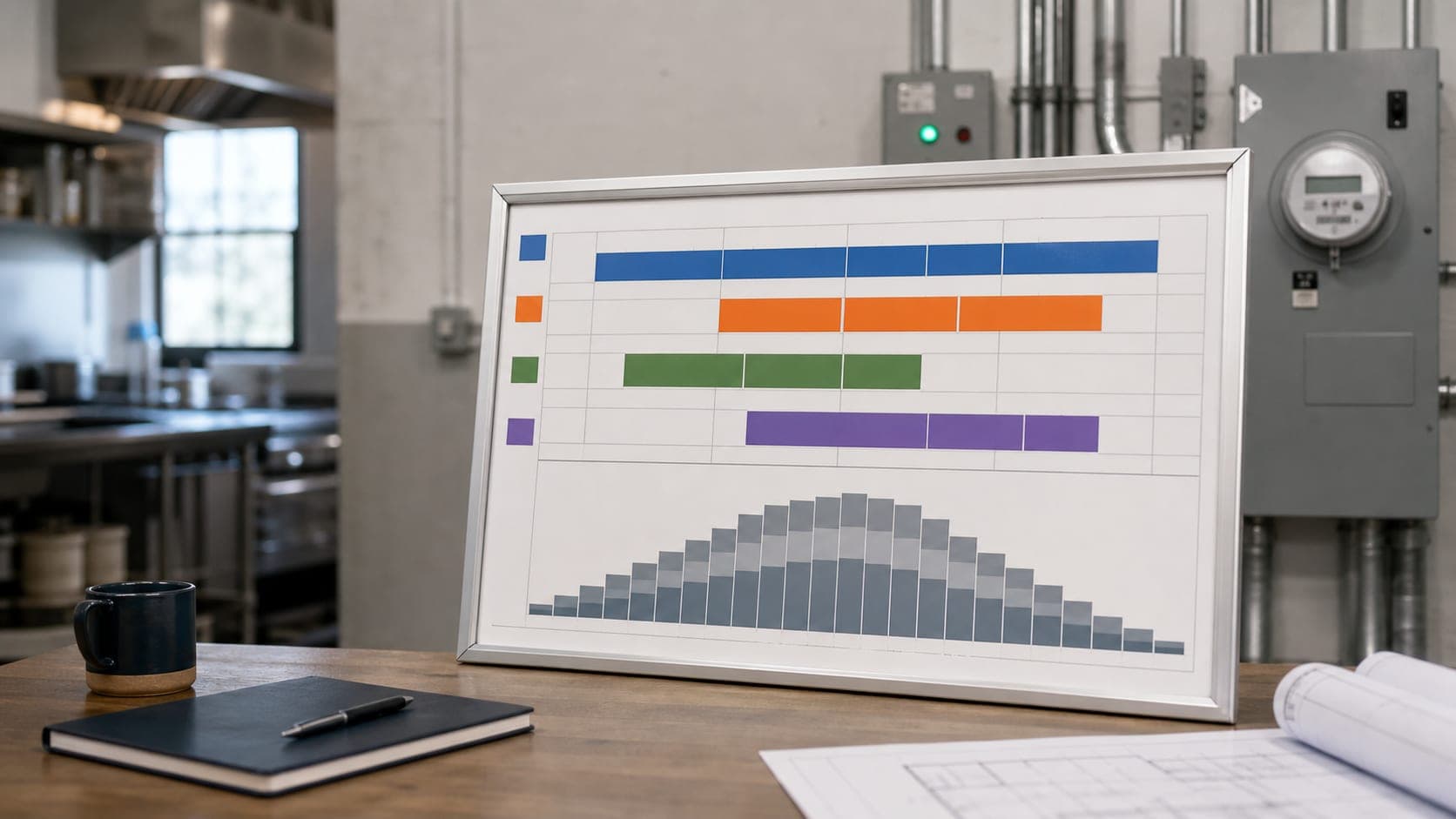
Staggering equipment startup can reduce simultaneous load. Scheduling high-load work outside likely peak periods may help when operations allow. Controls, programmable thermostats, efficient equipment, energy management systems, and monitoring can help manage demand.
Staggering, scheduling, controls, and monitoring
Facilities often lower measured peaks by shifting the start times of major equipment, using automatic controls to prevent simultaneous operation, and reviewing interval data to identify repeat high-load windows.
4CP Is a Texas Transmission Allocation Topic
PUCT rule 16 TAC §25.192 describes transmission rates using the average of ERCOT coincident peak demand for June, July, August, and September. The same rule describes DSP billing units and says ERCOT determines and files each DSP's average 4CP demand for transmission service billing.
June through September peaks in the PUCT rule
The rule uses those four summer months because they historically represent the highest system-wide coincident peaks in ERCOT.
Customer-level billing needs tariff proof
How the 4CP mechanism reaches any individual account requires the applicable tariff or official utility documentation. The rule itself addresses transmission-rate allocation at the DSP level rather than prescribing customer-level charges.
Demand Charge Questions
Editorial standards
SlashPlan publishes independent guidance to help Texans compare electricity plans. Our editorial team reviews each article without advertiser influence. See our editorial guidelines and monetization disclosure.
About the author
Roi CahanaEnergy advisor helping Texans better understand their electricity options and make more confident decisions. Focused on simplifying electricity plans, explaining confusing terms, and sharing practical guidance to help readers avoid common mistakes when comparing rates, contracts, and renewals.
Ready to compare plans?
Enter your ZIP code to see electricity plans available at your address.