How to Switch Energy Companies in Texas
A practical Texas guide to switching energy companies: confirm address eligibility, review your contract, enroll carefully, and verify the effective date.

Key Takeaways
- 1In Texas, switching energy companies starts with confirming that the service address is in an area where retail electric choice applies.
- 2The current contract controls the safest switch timing. Check the end date, renewal language, and any early termination fee before enrollment.
- 3A retail electricity provider switch changes the supplier relationship, not the delivery utility tied to the service area.
- 4A normal provider switch should not interrupt service by itself, but unrelated outages, account issues, or holds are separate problems.
- 5Save the enrollment confirmation, requested start date, confirmed effective date, and new contract end date so the switch can be verified later.
Switching energy companies in Texas is a straightforward process for many residents, but the steps depend on where you live. The key is knowing the right sequence: confirm your address qualifies, check your current contract, enroll carefully with a new provider, and understand what actually changes when the switch happens.
Start With Address Eligibility
Not every Texas address can choose a retail electricity provider. The state has areas with retail electric competition, where you can pick from multiple companies, and areas where the local municipal utility or electric cooperative handles everything.
Your service address determines which category you are in. A ZIP code or city name is not enough. You need the exact street address, including apartment or suite numbers, to know whether retail choice is available.
Before you search for a new provider or start enrollment, confirm that your address is in a competitive retail area. You can check through the official Texas retail-choice website or during the enrollment process with a new provider.
Service address beats statewide assumptions
A common mistake is assuming every Texas address has the same provider options. That is not true.
Some cities operate their own utilities, and several electric cooperatives serve rural areas where retail choice does not apply in the same way. If your address falls into one of those areas, the switching process may look different or may not be available at all.
Know Who You Are Actually Switching
When you switch energy companies in Texas, the change affects your retail electricity provider. That is the company that sells you the electricity plan, sends the bill, and handles your account relationship.
What does not change is the local delivery utility. That utility owns the poles, wires, meters, and delivery infrastructure. It handles outage response, meter reading, and the physical delivery of electricity to your home or business. The delivery utility stays tied to your service area regardless of which retail provider you choose.
This distinction matters because it clears up a lot of confusion. You change who you pay for electricity, not who delivers it. The delivery utility does not change when you change electricity companies.
Check Your Contract End Date
Before you enroll with a new provider, look up the end date of your current contract. This is the most important number in the switching process.
If you are near the end of the current term, switching is usually simple. The new provider takes over around the time the old contract expires.
If you are months away from the end date, switching is still possible, but the timing matters for a different reason. The end date tells you whether switching early creates a contract issue.
The end date decides whether waiting is safer
Finding the end date takes about two minutes. Look at your most recent bill or log into your online account. The contract end date is usually listed clearly. If you cannot find it, call your current provider and ask.
Once you have the date, you know whether you are in a safe switching window or whether you need to check for fees before proceeding.
Spot Early Termination Fee Language
Not every plan charges an early termination fee, but many do. The fee applies when you switch before the contract end date.
Look for the phrase "early termination fee" or similar cancellation language in your current agreement. The fee amount and the conditions that trigger it should be spelled out in the contract.
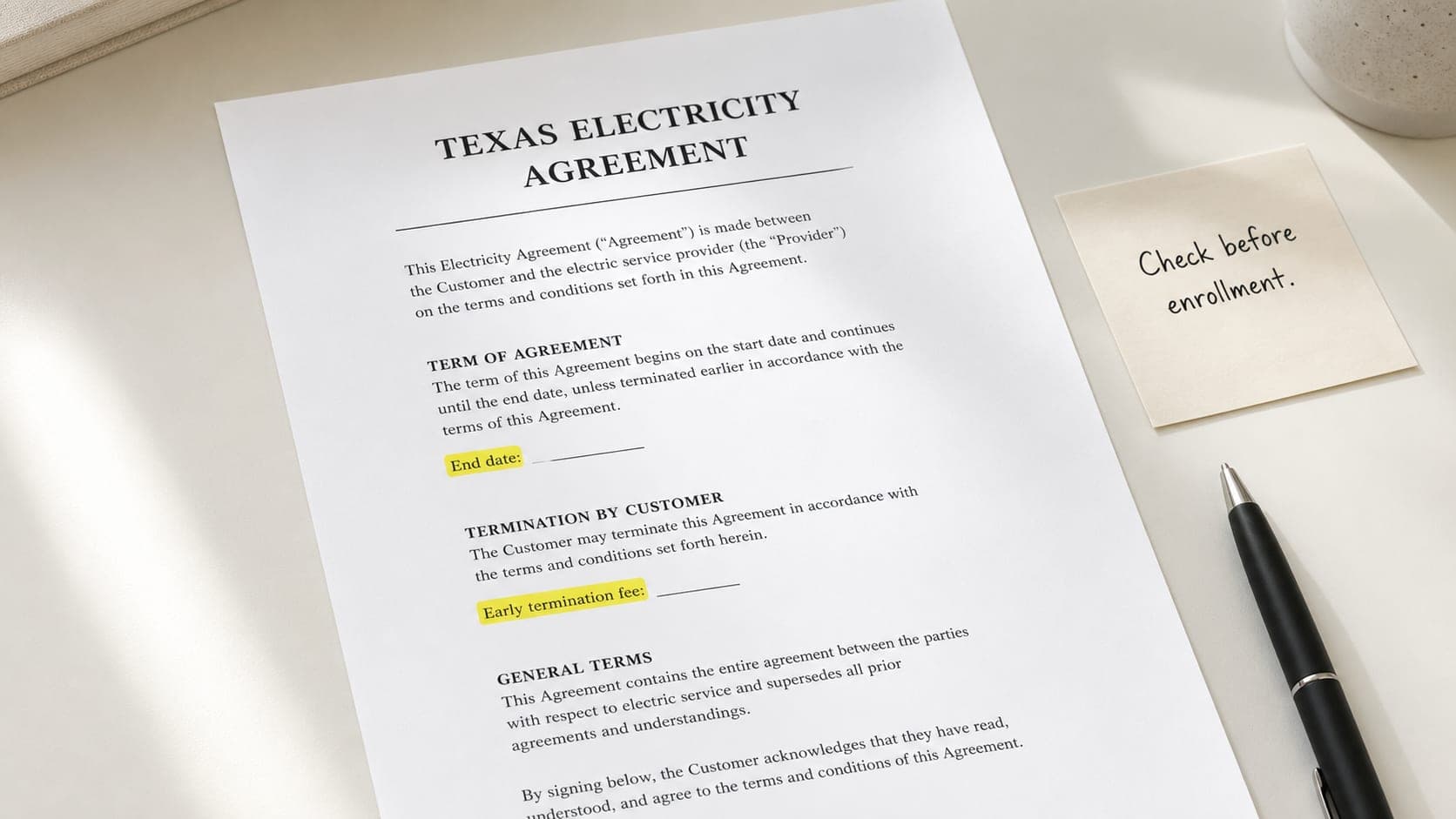
A few things to keep in mind about early termination fees:
- The fee may vary by plan and contract term.
- Some plans have no early termination fee at all, especially month-to-month arrangements.
- Whether you owe the fee depends on the specific contract language and the timing of your switch.
Do not assume a fee applies, and do not assume one does not apply. Check the contract directly.
Gather Account Details Before Enrollment
Once you know your address qualifies and you understand your current contract terms, gather the information you will need for enrollment.
For a residential account, have these items ready:
- The account holder name as it appears on the current bill
- The exact service address, including apartment or unit numbers
- The current provider name
- The account number from a recent bill
- The contract end date
For a business account, you may also need usage history, account authorization details, or documentation showing who is authorized to make changes.
Having this information ready before you start enrollment prevents delays and reduces the chance of errors in the service address or account information.
Confirm the New Provider Can Serve the Exact Address
When you find a new provider and plan that looks good, do not assume it is available at your address. Confirm directly.
Most provider websites let you enter your service address to check availability. The exact address matters. An apartment number or suite number that is missing or wrong can cause the enrollment to fail or the switch to be assigned to a different account.
This step is about eligibility and successful enrollment, not comparing providers. The goal is to make sure the switch goes through on the first try.
Complete Enrollment Without Canceling Twice
Once you choose a new provider and plan, follow the enrollment instructions exactly. In a normal switch, you do not need to call your current provider and cancel. The new provider handles the transition.
Making a separate cancellation request can create problems. It may trigger an early termination fee unnecessarily or cause your service to be disconnected if the cancellation is processed as a move-out rather than a switch.
The safest approach is to read the enrollment instructions carefully and follow them. If the process says not to cancel the current account, do not cancel it.
Save the Confirmation and Effective Date
After you complete enrollment, save everything. The confirmation number, the email confirmation, the new contract documents, and the effective date should all be stored in a place you can find later.
The effective date is the date the switch takes effect. It should come from the enrollment confirmation or provider communication.
Use the confirmed date, not a generic timeline
Switch timing varies. The confirmed effective date from your enrollment is the only reliable number. If the confirmation says the switch will take effect on a specific date, that is the date to use.
If you need to know the exact timeline before enrolling, ask the new provider during the enrollment process. Do not assume a fixed number of days applies to every switch in Texas.
Expect the Same Delivery Utility and Meter
After the switch takes effect, the delivery utility and the physical equipment stay the same.
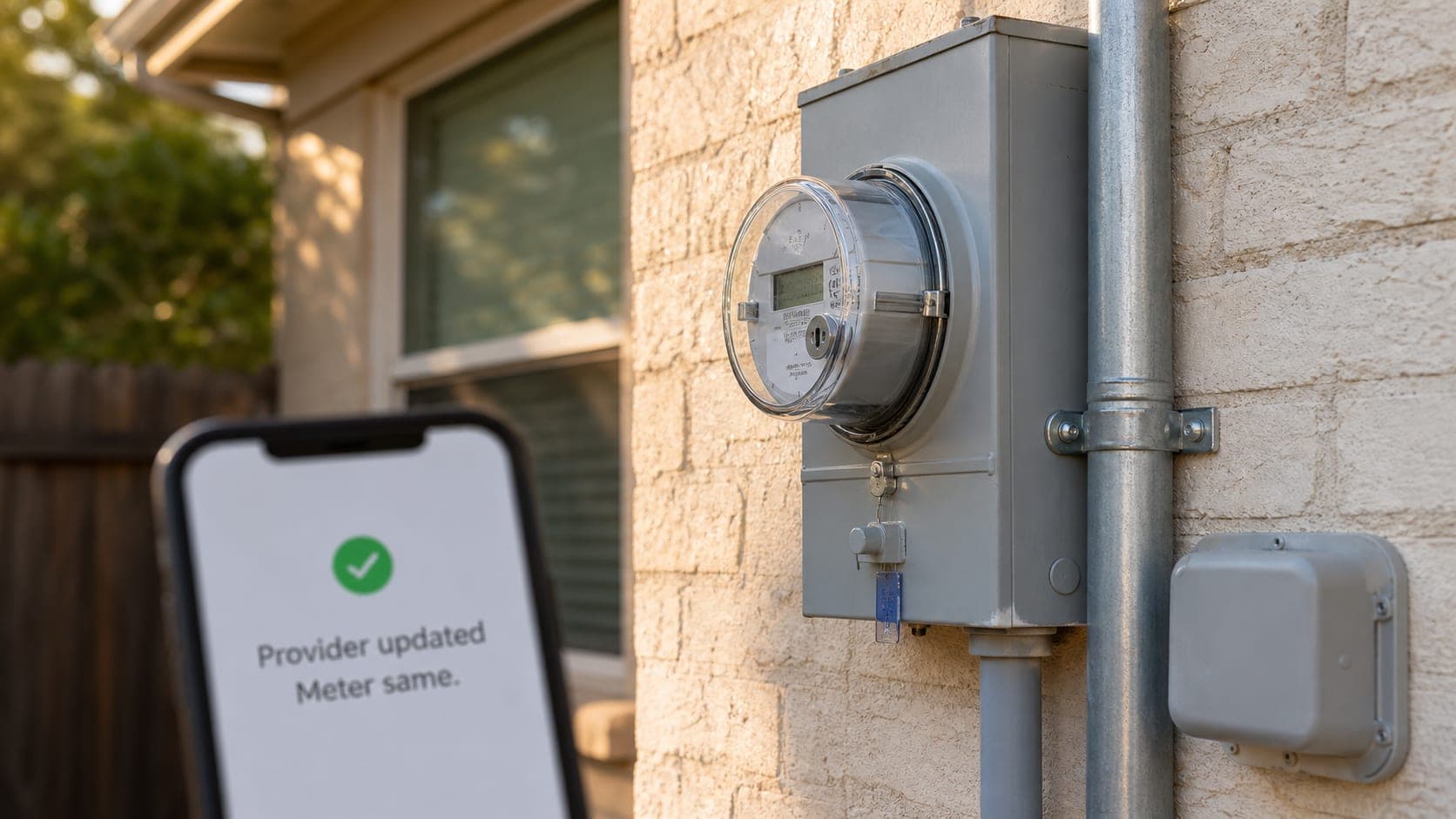
The meter on your home or business does not get replaced. The wires and poles that bring electricity to your property do not change. The delivery utility that handles outage response and infrastructure maintenance remains the company tied to your service area.
This is a normal part of the switching process. If you see the same delivery utility name on your bill after the switch, that is expected. It does not mean the switch failed.
Keep in mind that unrelated meter work, outages, move-in issues, or account holds are separate from a normal provider switch. Those situations still need to be handled through the proper channel, but they are not caused by the switch itself.
Report Outages to the Delivery Utility
After the switch, you might wonder who to call when the power goes out. The answer depends on the problem.
For outages, downed lines, or issues with the physical delivery of electricity, contact the local delivery utility. The utility handles the poles, wires, and infrastructure. It is the company that responds when the lights go out.
For account questions, billing issues, or contract changes, contact your retail provider. That is the company that handles your account relationship.
Knowing the difference saves time and frustration. Calling the wrong company can delay the response to an outage or create confusion about billing.
Review the Account After the Switch
After the effective date passes, check your account to confirm the switch worked correctly.
Log into the new provider's online account or check the first bill after the switch. Make sure the account shows the expected provider and that the service address is correct. If a charge looks off, use a structured process to audit your electricity bill before disputing it.
Keep the enrollment confirmation and contract documents until you have verified that the switch is complete. If something looks wrong, contact the new provider with your confirmation number ready.
Record the Next Renewal Date
Once the switch is active, record the new contract end date and any renewal notice timing from the new agreement.
The renewal language in the new contract may differ from what you are used to. Read it carefully. Do not assume the renewal terms match the previous provider's terms.
Switching Energy Companies in Texas FAQ
Editorial standards
SlashPlan publishes independent guidance to help Texans compare electricity plans. Our editorial team reviews each article without advertiser influence. See our editorial guidelines and monetization disclosure.
About the author
Roi CahanaEnergy advisor helping Texans better understand their electricity options and make more confident decisions. Focused on simplifying electricity plans, explaining confusing terms, and sharing practical guidance to help readers avoid common mistakes when comparing rates, contracts, and renewals.
Ready to compare plans?
Enter your ZIP code to see electricity plans available at your address.