Can You Get Energy in Texas With No Deposit?
No-deposit electricity in Texas can be real, but the details matter. A no-deposit offer may still involve eligibility rules, prepaid balances, verification, or service-start limits.
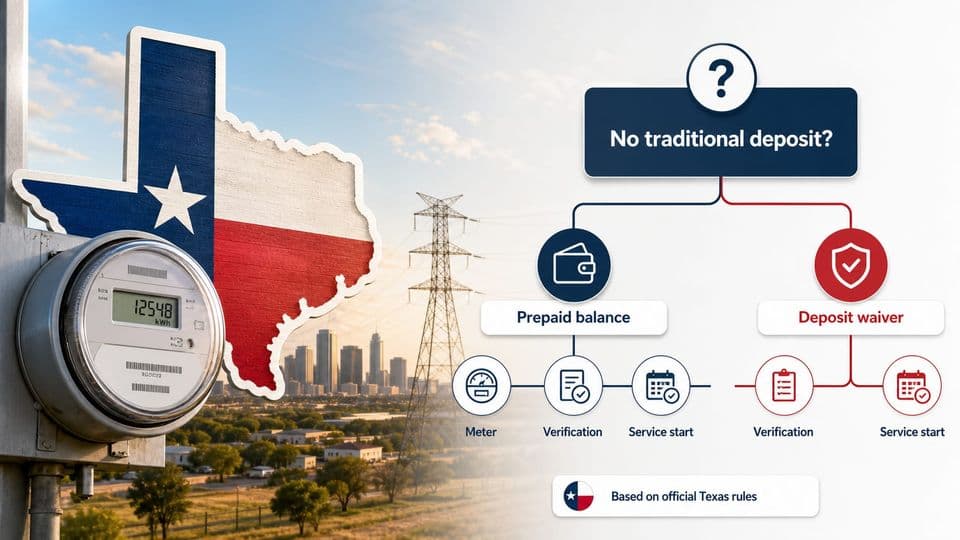
Key Takeaways
- 1No deposit does not always mean no money up front. A prepaid balance, first payment, or startup amount may still apply.
- 2Prepaid electricity is a common no-deposit path, but it changes how payments, balance notices, and service-interruption risk work.
- 3Deposit refund, credit, disconnection, and service-start details should be verified against the provider offering the no deposit plan.
You can sometimes start electricity service in Texas without paying a traditional deposit. Many providers market "no deposit electricity in Texas," but the details depend on your address, the provider's rules, the type of service you choose, and your account history.
A no-deposit offer does not always mean zero money up front, and it does not guarantee the same timing or process for every customer.
This guide explains what "no deposit" usually means in the Texas market, how prepaid service fits into the conversation, which claims need extra verification, and which official documents actually control deposit, prepaid-service, and service-start rules.
Can you get electricity in Texas without a deposit?
The short answer is yes, but only under specific conditions. Some Texas retail electric providers offer plans that do not require a traditional security deposit. These offers are common in two situations: prepaid electricity and certain eligibility-based deposit waivers. Even when a plan is called "no deposit," you may still need to pay a prepaid balance, a first month's bill, or a connection-related amount before the lights turn on.
For Texas customers
A no-deposit outcome is not automatic. Texas does not have a statewide rule that forces every provider to waive deposits for every customer.
Instead, the Texas Administrative Code includes rules about when deposits may be required and how prepaid service may be offered.
Whether you qualify for deposit-free service depends on the provider's current terms, the address you are moving into, and how the provider handles credit reviews, payment history, or account risk.
Provider eligibility still controls the result
Because providers set their own eligibility rules within the official rule framework, one customer may be approved for a no-deposit plan while a neighbor with a different address or account history is not.
If you see a "no deposit" label on a plan, read the disclosure or terms to see whether it is prepaid service, a waived deposit, or simply a plan with a lower upfront payment. The label alone does not tell you everything you need to know.
What a Texas electricity deposit usually means
In traditional postpaid service, a deposit is money held by the provider to reduce the risk of nonpayment. If a provider asks for a deposit, that money is typically refunded or credited later if you meet certain payment and account requirements. The Texas Administrative Code addresses deposits and credit requirements for retail electric service, but the exact amount, timing, and refund rules depend on the provider and the official rules that apply at the time of service.
Deposit, prepaid balance, and first payment
A major source of confusion is that "no deposit" does not always mean "no money before service." Three different concepts often get mixed together:
- A traditional deposit is money held separately and later refunded or credited under official and provider rules.
- A prepaid balance is money you pay ahead of use so that service continues as you use electricity. This is common in prepaid electricity Texas plans.
- A first payment or startup amount may cover the initial billing cycle or connection-related costs even when no deposit is required.
If you are comparing offers, ask whether the upfront amount is a refundable deposit, a prepaid balance you will draw down as you use power, or a nonrefundable payment for the first billing period.
Official rule text belongs in the draft notes
Because deposit amounts, refund timing, and credit rules can change, this article does not list specific dollar amounts or deadlines. If you are researching this topic for your own situation, check the provider's current terms and the relevant sections of the Texas Administrative Code for deposits and prepaid service. Those sources control the details more reliably than a marketplace summary or a provider advertisement.
Why deposits show up for some customers
Deposits are usually tied to how a provider evaluates account risk. In Texas, providers may consider factors such as credit history, payment history with previous utility accounts, and whether you have a prior delinquent balance in your name.
These reviews are not the same across every provider, and they do not always work the way a credit card or loan application works.
Credit review and payment history
A provider may use a credit check as part of its review, but the Texas market includes multiple ways to qualify for service.
Some providers emphasize prepaid options so that the deposit question is handled differently. Others may offer a deposit waiver if you can show a history of on-time payments with another utility or meet other eligibility criteria defined in the provider's terms.
You should not assume that a poor credit score automatically triggers a deposit or that a good credit score automatically removes one. The provider's stated rules and the official framework for deposits and prepaid service determine what happens in practice.
Deposit waivers and eligibility evidence
Some no-deposit outcomes happen because a provider waives the deposit after reviewing evidence you provide. That evidence might include a letter of credit from another utility, proof of on-time payments, or other documents the provider accepts.
Because waiver rules vary, you need to check the provider's current policy if you believe you may qualify for a waiver.
Paths that may avoid a traditional deposit
If you want electricity without a traditional deposit, two paths appear most often in Texas: prepaid service and eligibility-based waivers. Both paths have tradeoffs, and neither path is guaranteed for every customer.
Prepaid service
Prepaid electricity is a common way to avoid a traditional deposit. With prepaid service, you pay in advance and your usage is deducted from that balance.
Because the provider is not extending postpaid credit in the same way, the traditional deposit question may not apply. The Public Utility Commission of Texas explains that prepaid electric service does not require a deposit, though a provider may require an initial balance to establish and provide service.
Prepaid plans are not automatically better or worse than postpaid plans. They simply handle payments and risk in a different way.
Eligibility-based waiver
The other common path is a deposit waiver based on eligibility. Providers may waive deposits for customers who meet certain criteria, such as a demonstrated history of on-time utility payments or other evidence acceptable to the provider.
Waivers are provider-specific and may change over time, so you should not assume that a waiver available today will be available in a different city, at a different address, or under a different account name.
How prepaid electricity changes the customer responsibility
Prepaid electricity shifts more of the day-to-day payment responsibility to you. Instead of receiving a bill at the end of the month, you maintain a balance that changes as you use electricity. If your balance runs low, you may receive a notice and need to add money to keep service active.
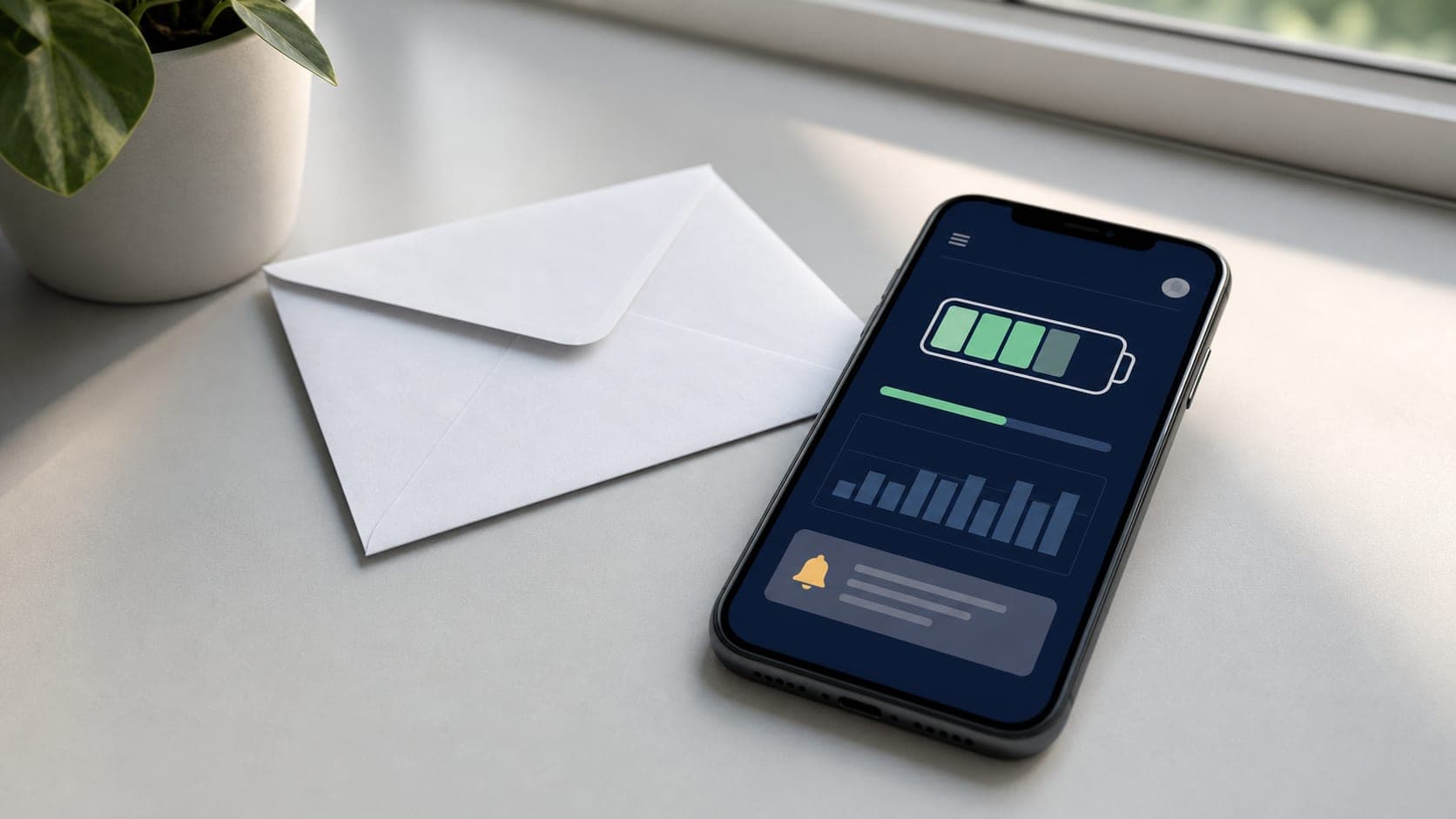
Balance notices and service interruption
Texas rules for prepaid electric service include requirements for how providers handle balance notices and service interruptions. The exact notice timing, disconnection process, and reconnection options depend on the current official rule text and the provider's prepaid-service terms.
If you are considering prepaid service, ask the provider how it handles low-balance notices, what methods are available for adding money, and what steps you can take if service is interrupted. Understanding those operational details before you sign up can prevent surprises later.
How prepaid differs from monthly postpaid billing
Prepaid service and postpaid service feel different in daily life. With postpaid billing, you use electricity first and receive a bill later.
With prepaid service, you pay first and monitor your usage against the balance you have on account.
Some customers prefer prepaid service because it makes daily usage and costs more visible. Others find the need to monitor balances and respond to notices less convenient than a single monthly bill.
From a deposit perspective, prepaid service often removes the traditional deposit requirement, but it replaces that requirement with the need to keep a balance on account.
Whether that tradeoff works for you depends on how you prefer to manage household bills and usage.
No credit-check claims need careful wording
Many no-deposit electricity pages also mention "no credit check" or "no SSN required" These phrases are part of the market language you may see when researching options, but they are not official rule terms, and they do not mean the same thing for every provider.
No credit check does not mean no verification
A provider that advertises "no credit check" may still verify your identity, your address, your payment method, and your account status in other ways. Some providers use nontraditional screening or focus on prepaid service so that a formal credit check is not required. That does not mean there is no screening at all.
If a no-credit-check claim matters to your decision, ask the provider what verification steps still apply. The answer may affect how quickly you can start service and what documents you need to provide.
No SSN claims need provider proof
Similarly, "no SSN required" claims should be read carefully. Some providers allow you to start service without providing a Social Security number, but they may still require an Individual Taxpayer Identification Number, a passport, or other identity documents.
The specifics depend on the provider and the type of plan you choose. Do not assume that "no SSN" means "no identity verification".
Same-day service is not the same as guaranteed approval
Search results for no-deposit electricity often include "same day electricity Texas" language. Same-day service can be real in some cases, but it is not guaranteed, and it does not automatically come with every no-deposit plan.
Move-in timing and meter status
Several factors affect whether your electricity can be turned on the same day you request it. These factors include whether the address already has an active meter, whether there is a switch hold or prior account issue, how quickly the provider processes new enrollments, and whether the local utility can complete the physical connection or switch on the requested date.
Because these factors involve both the provider and the local utility, the timeline can vary from one address to another.
Same-day claims need current confirmation
If same-day service is important to you, confirm it directly with the provider before making plans. Ask what cut-off times apply, what happens if there is a meter issue, and whether same-day service is available at your specific address. Do not rely on a general marketing claim to plan your move-in or schedule time off work.
Deposit refunds and credits
If you do pay a deposit at some point, you may wonder when that money is refunded or credited back to you. Texas rules address deposit refunds and credits, but the exact timing and form of the refund depend on the official rule text and the provider's compliance with those rules. Generally, electric providers refund the deposit after 12 months of service.
Refunds, credits, and account closure
In general, deposits are either refunded separately or applied as a credit to your account. The rules that govern this process are part of the official framework for retail electric service in Texas.
Because those rules can be updated and because providers handle account details in specific ways, you should not assume a fixed deadline or a fixed interest amount unless you have checked the current provider terms and the relevant rule sections.
Account history can still affect the outcome
Even if you find a plan that advertises no deposit, your account history can still affect whether service starts smoothly.
In Texas, retail electric accounts can be affected by prior balances, switch holds, and other account-status issues that are not directly part of the deposit question.
Switch holds and prior account issues
A switch hold is a status that can prevent you from changing providers or starting new service until a prior issue is resolved.
Switch holds are separate from deposits, but they often come up in the same conversation because both can delay service. If you have had a delinquent balance or an unpaid bill in the past, check your account status before you assume that a no-deposit plan will let you start service immediately.
New address does not always reset obligations
Moving to a new address does not automatically clear old utility obligations. In some cases, a prior account issue can follow you even if you are moving across town.
This is one reason why a no-deposit plan may still involve verification steps and why the provider may ask for more information before finalizing your enrollment.
If you are unsure about your account status, you can contact the provider or check with the Public Utility Commission of Texas for guidance on how account issues are handled in the current rules.
Reader checklist for no-deposit electricity language
Because no-deposit electricity in Texas involves several overlapping concepts, a short checklist can help you interpret plan language and avoid surprises. Use the following questions when you evaluate an offer.
Questions to ask before relying on a no-deposit claim
- Does the plan avoid a traditional deposit, or does it require a prepaid balance or first payment instead?
- If the plan is prepaid, how will I receive balance notices, how do I add money, and what happens if my balance runs out?
- What verification steps still apply, even if there is no credit check or no SSN required?
- Is same-day service specifically available for my address, or is it a general marketing claim?
- If a deposit is required later, what do the current provider terms say about refunds and credits?
Finally
No-deposit electricity in Texas can be a real and useful option, especially if you prefer prepaid service or if you qualify for a deposit waiver. The key is to read past the headline, understand what the provider actually requires, and confirm the details that matter most to your situation before you schedule a move-in or pay any money up front.
Frequently asked questions
Editorial standards
SlashPlan publishes independent guidance to help Texans compare electricity plans. Our editorial team reviews each article without advertiser influence. See our editorial guidelines and monetization disclosure.
About the author
Roi CahanaEnergy advisor helping Texans better understand their electricity options and make more confident decisions. Focused on simplifying electricity plans, explaining confusing terms, and sharing practical guidance to help readers avoid common mistakes when comparing rates, contracts, and renewals.
Ready to compare plans?
Enter your ZIP code to see electricity plans available at your address.