What Appliances Use the Most Electricity at Home?
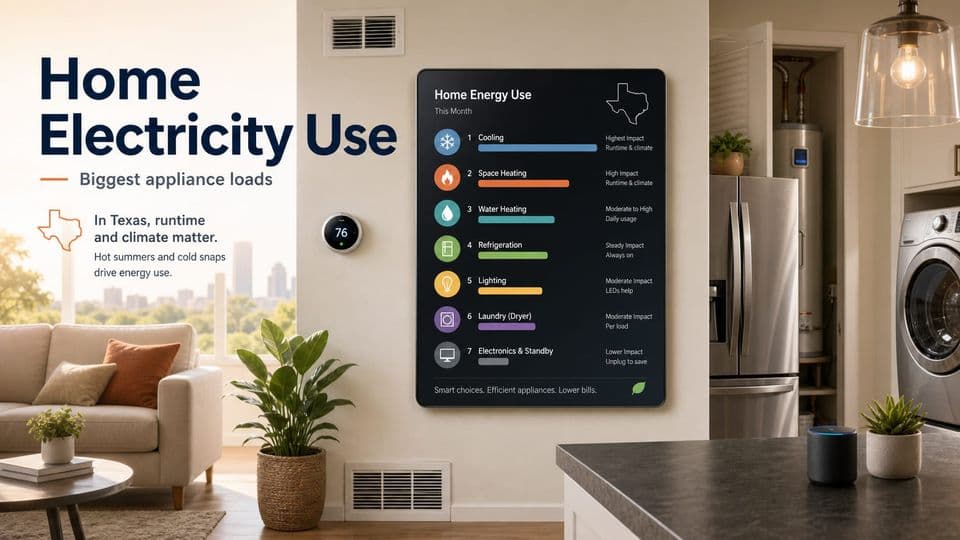
Cooling, space heating, and water heating are usually the largest electricity categories at home. Lighting, refrigerators, electronics, laundry, cooking, and seasonal devices can also matter depending on runtime, age, settings, and household habits.
Key Takeaways
- 1Cooling, space heating, and water heating are usually the largest electricity uses in a home.
- 2Lighting and refrigerators can also be major loads because they are used often or stay plugged in all year.
- 3Texas homes can see cooling play a larger role because air conditioners run for long stretches in hot weather.
- 4Standby power from electronics is usually small per device, but several idle devices can create a steady background load.
- 5The best way to find your own biggest appliance load is to check wattage, runtime, EnergyGuide labels, or measured kWh.
If you are looking at your electricity bill and wondering where all the power went, you are not alone. People often ask what appliances use the most electricity because they want to find ways to lower their monthly costs or just understand how their home works.
In 2020, the largest categories of residential electricity consumption were air conditioning, space heating, and water heating. According to the U.S. Energy Information Administration (EIA), air conditioning accounted for about 19% of residential site electricity use, while space heating and water heating each accounted for about 12%. Lighting and refrigerators are typically the next two largest uses.
While these national averages provide a solid starting point, your home is unique. The way you use appliances, the age of your equipment, and even the weather in your region change which devices cost you the most.
Home Electricity Use by Appliance
To understand your bill, it helps to group your appliances into categories based on how much power they pull from the grid. The EIA tracks these "end uses" to show how the average American home consumes electricity.
Cooling and Heating: The Top Consumers
Heating and cooling systems move a lot of energy to change the temperature of your home. Because of this, they usually sit at the top of the list.
- Air Conditioning: In warm climates, like Texas and the rest of the South, air conditioning is often the single largest electricity user. A central A/C unit or a heat pump in cooling mode can run for many hours a day during the summer.
- Space Heating: Even in milder climates, electric space heating uses a significant amount of power. In homes that use electricity as their primary heat source, this category can easily rival or exceed air conditioning.
Water Heating and Refrigeration
These two categories are different from heating and cooling because they happen every day, all year long.
- Water Heating: Water heating is typically the second-largest energy expense in a home, accounting for about 18% of total home energy use. Every shower, load of laundry, and cycle of the dishwasher that uses hot water adds to this total.
- Refrigeration: A refrigerator is a "baseload" appliance. It stays plugged in 24/7 and cycles on and off to keep food cold. Because it runs every hour of every day, it remains one of the top electricity consumers even though it doesn't use as much power at any single moment as an A/C unit.
Why Your Home May Differ From National Data
National averages are useful, but they don't tell the whole story for your specific house. Several factors can shift which appliance is your personal "top user."
Homes in the Southern United States, particularly single-family detached homes, tend to consume the most electricity on average. This is largely driven by the long cooling seasons. Conversely, a home in a cooler climate might see space heating as their number one use, while their A/C costs are negligible.
Other factors include:
- Home Size: Larger homes require more power to heat and cool.
- Fuel Sources: If your home uses natural gas for heating or water heating, your electricity bill will look very different from a home that uses electric heat pumps or electric water heaters.
- Household Habits: A family of five will use significantly more hot water and laundry power than a person living alone.
Air Conditioning Electricity Use in Warm Climates
For many people living in Texas and other hot regions, the question of what appliances use the most electricity is easily answered by looking at the thermostat. Air conditioning electricity use spikes during the summer months because cooling equipment must work harder to overcome the outdoor heat.
Does Air Conditioning Use a Lot of Electricity?
Yes, especially in hot weather. Central air conditioners and heat pumps are high-wattage devices. When they run for long periods, they consume a large amount of kilowatt-hours (kWh).
The actual amount of electricity your A/C uses depends on:
- The Age of the Unit: Older units with lower SEER (Seasonal Energy Efficiency Ratio) ratings are less efficient.
- Thermostat Settings: Setting the thermostat lower in the summer increases runtime and electricity use.
- Insulation and Air Leaks: If your home is poorly insulated, your A/C will run more often to maintain the temperature.
In these regions, even small changes in how you manage your cooling can lead to noticeable shifts in your monthly electricity usage.
Electric Heat and Fuel Source
While air conditioning dominates in the South, electric space heating is a major factor in other parts of the country. If your home uses electric baseboards, an electric furnace, or a heat pump for winter warmth, this category can become your highest use of electricity.
Unlike natural gas or propane, which are measured in therms or gallons, electric heating draws directly from your home's electrical supply. Because electric resistance heating converts electricity directly into heat, it can be a very heavy user of power during cold snaps.
Water Heater Electricity Use
Water heating is a "background" heavy user. You don't see it running, but it is almost always active.
What Drives Hot Water Costs?
Water heater electricity use is driven by two main things: the amount of hot water your household uses and how much energy the heater loses while standing by.
- Daily Draw: Long showers, hot baths, and frequent dishwashing all increase the demand for hot water.
- Laundry: Washing clothes in hot water adds to the water heater's workload. Using cold water for laundry is one way to shift this load away from the water heater.
- Tank vs. Tankless: Traditional tank water heaters keep a large volume of water hot at all times. This leads to "standby heat loss." Tankless water heaters avoid this by heating water only when a faucet is turned on, though they still require a significant amount of electricity to heat the water quickly.
Because water heating is such a large part of your energy profile, even small changes in your hot water habits can make a difference in your overall consumption.
Tank Standby Losses and Hot-Water Draws
If you have a standard tank water heater, it is constantly using a small amount of energy to keep the water in the tank at the set temperature. This is known as standby loss.
Every time you open a hot water tap, cold water enters the tank, and the heating elements kick on to bring the temperature back up. The more people living in your home, the more frequently these "draws" happen. This is why water heating is consistently ranked as one of the top three electricity uses in the EIA data.
Refrigerators and Freezers Are Plugged In All Year
Refrigerators are often overlooked because they don't make a lot of noise or blow hot air like an A/C unit. However, refrigerator electricity use adds up because these appliances never turn off completely.
Do Refrigerators Use a Lot of Electricity?
A modern, efficient refrigerator might not use a massive amount of power compared to an old unit, but because it runs 8,760 hours a year, the total kWh can be substantial.
There are a few reasons why your fridge might be a top user:
- Age: Refrigerators made 15 or 20 years ago use significantly more electricity than modern ENERGY STAR models.
- Type: Side-by-side models with ice makers and water dispensers use more power than simple top-freezer models.
- Placement: If a refrigerator is placed in a hot garage or next to a heat-producing oven, it has to work harder to stay cool.
Second Refrigerators and Separate Freezers
Many homes have a second refrigerator in the garage or a standalone freezer in the basement. These "extra" units are often older, less efficient models that were moved when a new kitchen fridge was purchased.
Because these appliances are usually not as efficient as modern ones and may be running in unconditioned spaces (like a hot garage in the summer), they can become surprisingly large electricity users. If you are trying to find the "hidden" cause of high electricity use, check the garage or basement for these extra appliances.
Laundry Appliances: Heat Is the Expensive Part
When people think of laundry, they often think of the washing machine. However, when it comes to electricity, the washer is usually the smaller partner in crime.
Dryer Heat and Washer Water Temperature
The real electricity user in the laundry room is the clothes dryer. Dryers use electric heating elements to warm the air that dries your clothes. This requires a lot of power, similar to a small space heater or a powerful oven.
- Dryer Runtime: The longer the dryer runs, the more electricity it uses. Using a high spin cycle on your washer can remove more moisture before the clothes even reach the dryer, reducing the drying time.
- Washer Settings: If your washing machine uses hot water, it is pulling power from your water heater. Switching to cold water washing eliminates this part of the laundry electricity load.
Lighting: Small Fixtures Can Become a Real Load
Lighting is one of the easier categories to control, but it can still be a major factor in your home's electricity use if you have a lot of fixtures or use older bulbs.
LED Bulbs Versus Incandescent Bulbs
The type of lightbulb you use has a massive impact on your lighting costs. According to the U.S. Department of Energy, LED bulbs use up to 90% less energy and last up to 25 times longer than traditional incandescent bulbs.
If your home still uses incandescent bulbs, you are using five times more electricity for the same amount of light.
Consider these factors:
- Number of Bulbs: A home with 30 or 40 lightbulbs will see a much bigger impact from lighting than a home with recessed lighting or fewer fixtures.
- Hours of Use: Outdoor lights, porch lights, or hallway lights that are left on 24/7 are the biggest contributors to lighting electricity use.
- LED Savings: Switching to LEDs is one of the most straightforward ways to reduce a home's electricity consumption without changing your habits.
Electronics and Standby Power: The Hidden Background Load
Even when you turn off your TV or computer, many of these devices continue to draw a small amount of electricity. This is known as standby power.
Devices That Keep Drawing Power
Many modern electronics use electricity to power displays, remote controls, or internal clocks while they are technically "off." This includes:
- Televisions and cable boxes
- Game consoles
- Computers and monitors
- Microwave ovens (for the clock)
- Coffee makers with programmable timers
While the amount of power per device is small, it can add up over time. If you have a dozen devices drawing small amounts of power 24 hours a day, it creates a steady "background load" on your electricity bill.
When a Power Strip Helps
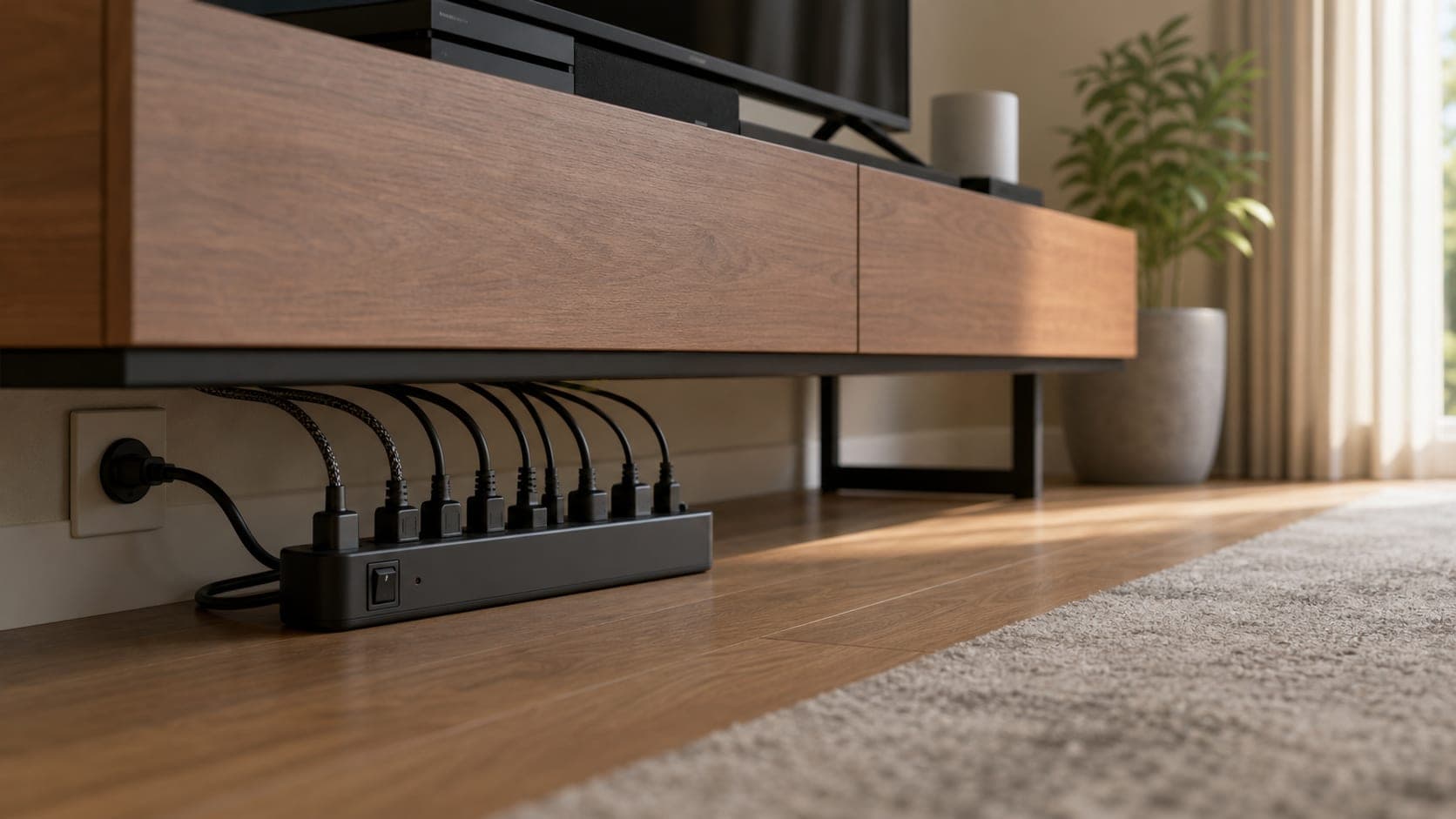
One way to manage standby power is to plug grouped electronics into a switched power strip. By turning off the strip, you cut the power to all the connected devices at once. This is particularly useful for home entertainment centers where multiple devices are plugged into the same area.
Using a power strip gives you a physical way to ensure that devices are truly off, rather than sitting in a low-power "vampire" mode.
Cooking, Dishwashing, and Small Kitchen Appliances
The kitchen contains several high-wattage appliances that can drive up your electricity use during the hours they are in use.
Ovens, Ranges, and Heat-Dry Cycles
Electric ovens and cooktops use powerful heating elements to cook food. While people don't usually use their ovens for 8 hours a day, the high wattage means that even an hour of cooking can use a noticeable amount of electricity.
Dishwashers also contribute to this category. While the motor that sprays the water doesn't use a huge amount of power, the "heat dry" setting uses an electric heating element to dry the dishes. Using the "air dry" setting on your dishwasher can help reduce this specific use of electricity.
Small kitchen appliances like toasters, air fryers, and slow cookers also use electricity, but because they are usually used for short periods, they rarely become the "top" user unless used very frequently.
Seasonal and Extra Appliances That Can Surprise You
Sometimes the appliance using the most electricity isn't one of the "big" ones. It might be a seasonal device that you only use for a few months out of the year but uses a lot of power while it's running.
Runtime Matters More Than the Appliance Name
A device that runs for 10 hours a day will almost always use more electricity than a device that runs for 10 minutes a day, even if the second device is more powerful.
Common seasonal surprises include:
- Space Heaters: Portable electric space heaters are extremely high-wattage. Using even one of these for several hours a day can dramatically increase your bill.
- Pool Pumps: If you have a swimming pool, the pump may run for several hours a day to circulate the water. This can make it one of the top electricity users in a home during the summer.
- Dehumidifiers: In damp climates, dehumidifiers run frequently to pull moisture from the air. Because they use a compressor similar to an A/C unit, they can use a significant amount of electricity over time.
How to Check Which Appliance Uses the Most in Your Home
National data tells you what is true for the "average" home, but the only way to know for sure what is happening in your house is to measure it.
EnergyGuide Labels, Plug-In Monitors, and Runtime
You can estimate appliance electricity use using a few different methods:
- Nameplate Wattage: Look for a sticker on the appliance that lists its wattage. You can multiply the watts by the number of hours you use it to get an estimate of the energy used.
- EnergyGuide Labels: New major appliances come with a yellow EnergyGuide label that provides an estimated yearly energy cost. This can help you compare the efficiency of different models.
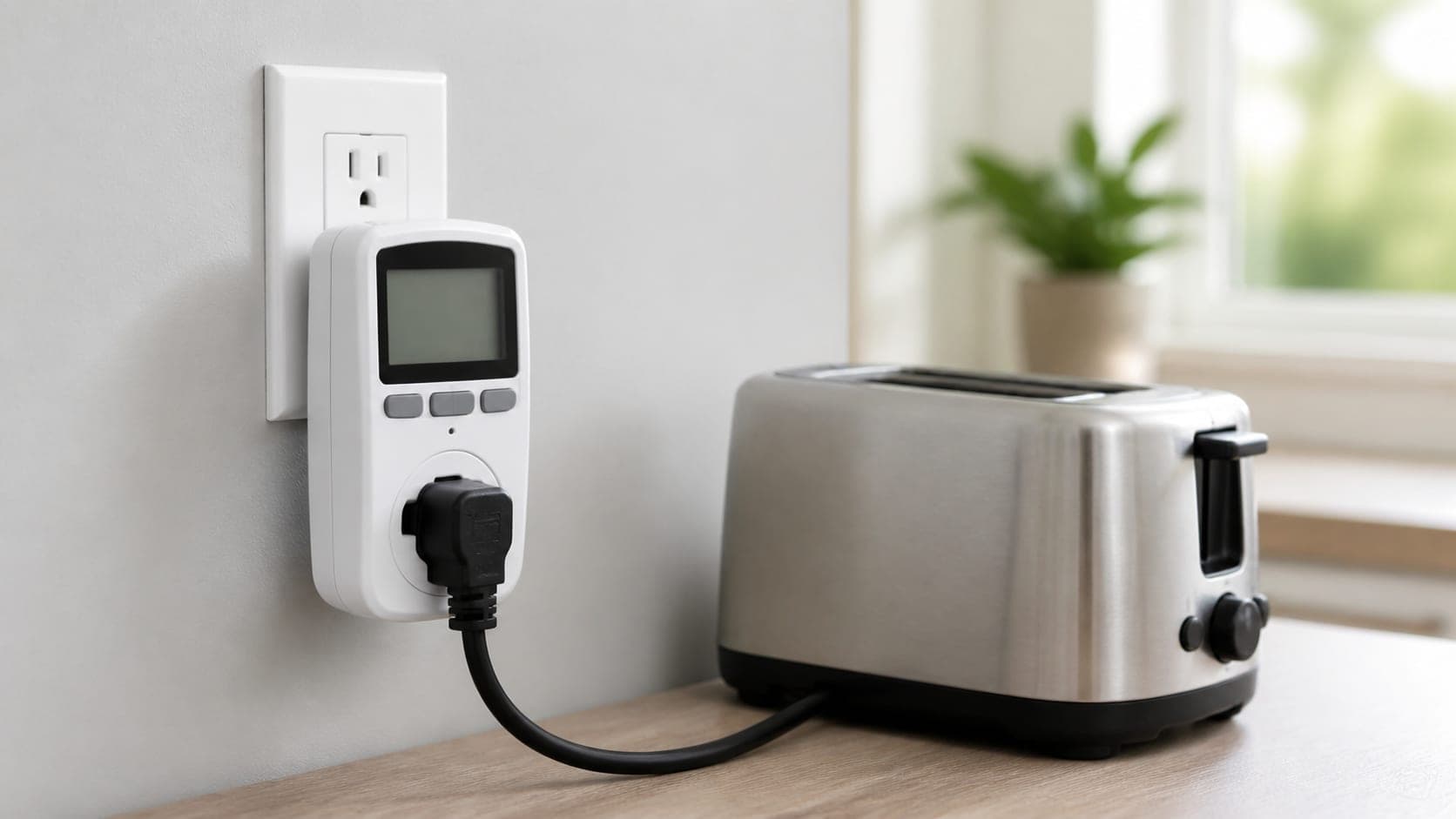
- Plug-In Electricity Usage Monitors: These are small devices you plug into the wall and then plug your appliance into. They measure the actual electricity flowing to the device over time. These are very useful for 120-volt devices like TVs, computers, and refrigerators.
Remember that actual wattage can vary based on the settings you choose, the age of the appliance, and how often the device cycles on and off.
If you want to find your biggest electricity user, start with the devices that run the most often and the devices that produce the most heat. Those are usually the places where the most power is being used.
Appliance Electricity Use FAQ
Editorial standards
SlashPlan publishes independent guidance to help Texans compare electricity plans. Our editorial team reviews each article without advertiser influence. See our editorial guidelines and monetization disclosure.
About the author
Roi CahanaEnergy advisor helping Texans better understand their electricity options and make more confident decisions. Focused on simplifying electricity plans, explaining confusing terms, and sharing practical guidance to help readers avoid common mistakes when comparing rates, contracts, and renewals.
Ready to compare plans?
Enter your ZIP code to see electricity plans available at your address.