How to Get the Best Electric Deal in Texas
A practical Texas shopper guide to finding an electricity plan that fits your usage, budget, location, and contract needs.
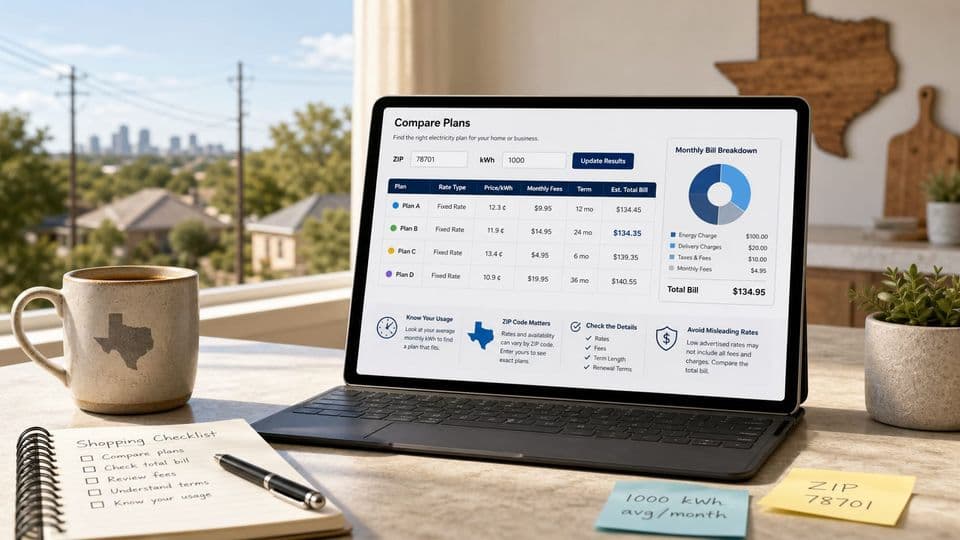
Key Takeaways
- 1The best Texas electricity deal is the plan that produces the best expected bill for your usage, not the lowest advertised rate.
- 2Your ZIP code and utility area determine which plans and providers are available.
- 3Actual kWh history matters because bill credits, minimum usage rules, and seasonal cooling loads can change the winner.
- 4Read the Electricity Facts Label, Terms of Service, and renewal language before enrolling.
- 5A fixed-rate plan can improve price predictability, but it does not freeze every bill charge.
- 6Promotions and bill credits should be evaluated over the full contract, not just the first month.
A Texas electricity plan can look cheap until delivery charges, usage tiers, or monthly fees change the actual bill. The real test is whether the expected monthly total fits the household usage pattern for the full contract term.
The Best Deal Is the Plan That Fits Your Usage
Shoppers often focus on the lowest advertised rate on a comparison site. That number alone rarely determines the final bill.
A low energy charge can be offset by base charges, minimum usage rules, or bill credits that only apply above a certain threshold. Delivery, transmission, and tax components can also move the total even when the provider rate stays fixed.

The better approach is to weigh four factors together: the total expected bill at your actual usage, price predictability during the contract, how well the term matches your move or renewal timeline, and the provider's billing clarity. No single plan stays cheapest across every address and every season.
Why the advertised rate can mislead
The rate posted on a comparison card usually reflects only the energy portion at one specific usage level. When actual monthly kWh varies or the usage falls outside the average price example shown on the Electricity Facts Label, the savings can disappear.
What to optimize for besides price
Many households place more weight on avoiding surprises than on shaving the first month. That often means choosing a plan whose fees and renewal terms stay acceptable even if usage dips in milder months.
Start With Your ZIP Code and Utility Area
Texas plan options depend on the local utility area that serves the address. Two homes in the same city can see different providers and different rates if they fall under separate utilities.

Enter the ZIP code first so the available plans reflect the correct service territory. Offers can differ between Oncor, CenterPoint, AEP Texas, and TNMP areas even when the same retail provider appears in multiple zones.
Why location changes the plan list
Retail electricity providers must register with each utility before they can serve customers there. A plan that looks attractive in one ZIP may not be offered at the new address.
Moving service and switching service are different
Setting up service at a new address requires the utility to confirm the meter and start date. Switching providers at an existing home usually keeps the same meter but updates only the supply account and rate.
Pull Your kWh History Before You Compare
Plan features such as bill credits or minimum-usage thresholds perform differently depending on how much electricity the household uses each month. Checking the last twelve months of bills gives a clearer picture than a single recent statement.
Summer cooling loads often double or triple usage compared with spring or fall. A plan that rewards high summer kWh with a credit can increase the effective rate for a low-usage apartment that never reaches the threshold.
Read the Electricity Facts Label Before You Trust the Rate
Texas requires every plan to publish an Electricity Facts Label that lists the energy charge, any base charge, and average price examples at different usage levels. Compare those examples against the household's actual monthly kWh before enrolling.
The label also shows whether the rate is fixed or variable and whether the plan includes renewable content. Review the Terms of Service and Your Rights as a Customer disclosure at the same time to catch contract length and cancellation rules.
Find the Fees That Move the Bill
Monthly service charges, early termination fees, and minimum-usage requirements appear in the plan documents rather than in the headline rate. Delivery-related charges such as transmission and ancillary services remain regulated and can change even when the provider sets a fixed energy rate.
For residential accounts, focus on those recurring fees rather than business demand charges, which apply to commercial meters.
Choose a Plan Type You Can Live With
Fixed-rate plans hold the provider's energy charge steady for the contract term, though the total bill can still shift with usage or delivery adjustments. Variable and indexed plans follow market or formula movements and suit households comfortable with month-to-month changes. Time-of-use plans charge different rates by hour and can lower costs only when the household can move major usage away from peak periods.
Use Contract Length to Control Timing and Risk
Short contracts give more flexibility to switch later but expose the account to whatever renewal price appears at the end of the term. Longer contracts lock pricing farther ahead but can become costly if the household plans to move or wants to shop again soon. Check the cancellation fee and notice requirements before assuming a longer term is always safer.
Treat Promotions and Bill Credits Like Temporary Math
Introductory discounts, referral rewards, and usage-based credits reduce the bill only while the condition lasts. After the promotional window or credit threshold ends, the regular rate and fees apply. Compare the full contract cost instead of judging the offer by the first month alone.
Know What Switching Changes and What It Does Not
Switching retail providers updates only the supply plan and billing relationship. The local utility continues to maintain the wires, poles, and outage response for the address. A fixed energy rate does not prevent regulated delivery charges from adjusting.
Check Provider Fit Before You Enroll
Look at billing format, payment options, and how easy the provider makes it to reach support. Renewable content can matter for some households, but the price and contract terms still need to match usage and timeline first. Save the contract documents and the expected end date after enrollment so renewal timing stays clear.
Shop Before the Decision Gets Expensive
Compare plans before the current contract expires, after an unexplained bill increase, or ahead of a move-in date. Waiting until the renewal notice arrives or the move-in deadline is close can leave fewer practical options and less time to review documents.
Review your recent bills, note the contract end date, and enter the ZIP code on a comparison site before making a final choice.
Questions Texas Shoppers Ask Before Choosing a Plan
Sources & References
Editorial standards
SlashPlan publishes independent guidance to help Texans compare electricity plans. Our editorial team reviews each article without advertiser influence. See our editorial guidelines and monetization disclosure.
About the author
Roi CahanaEnergy advisor helping Texans better understand their electricity options and make more confident decisions. Focused on simplifying electricity plans, explaining confusing terms, and sharing practical guidance to help readers avoid common mistakes when comparing rates, contracts, and renewals.
Ready to compare plans?
Enter your ZIP code to see electricity plans available at your address.